
Tokyo salone
NOURISH
STORIES
interview
Venice Biennale winner Archie Moore is also the greatest graphic designer ever
Written by Chris Bake / Edited by Ana Arriola-Kanada
“Kith and Kin is a memorial dedicated to every living thing that has ever existed; it is a space for quiet reflection on the past, the present, and the future.”
— Archie Moore
Some works don’t just sit in a room; they change the room.
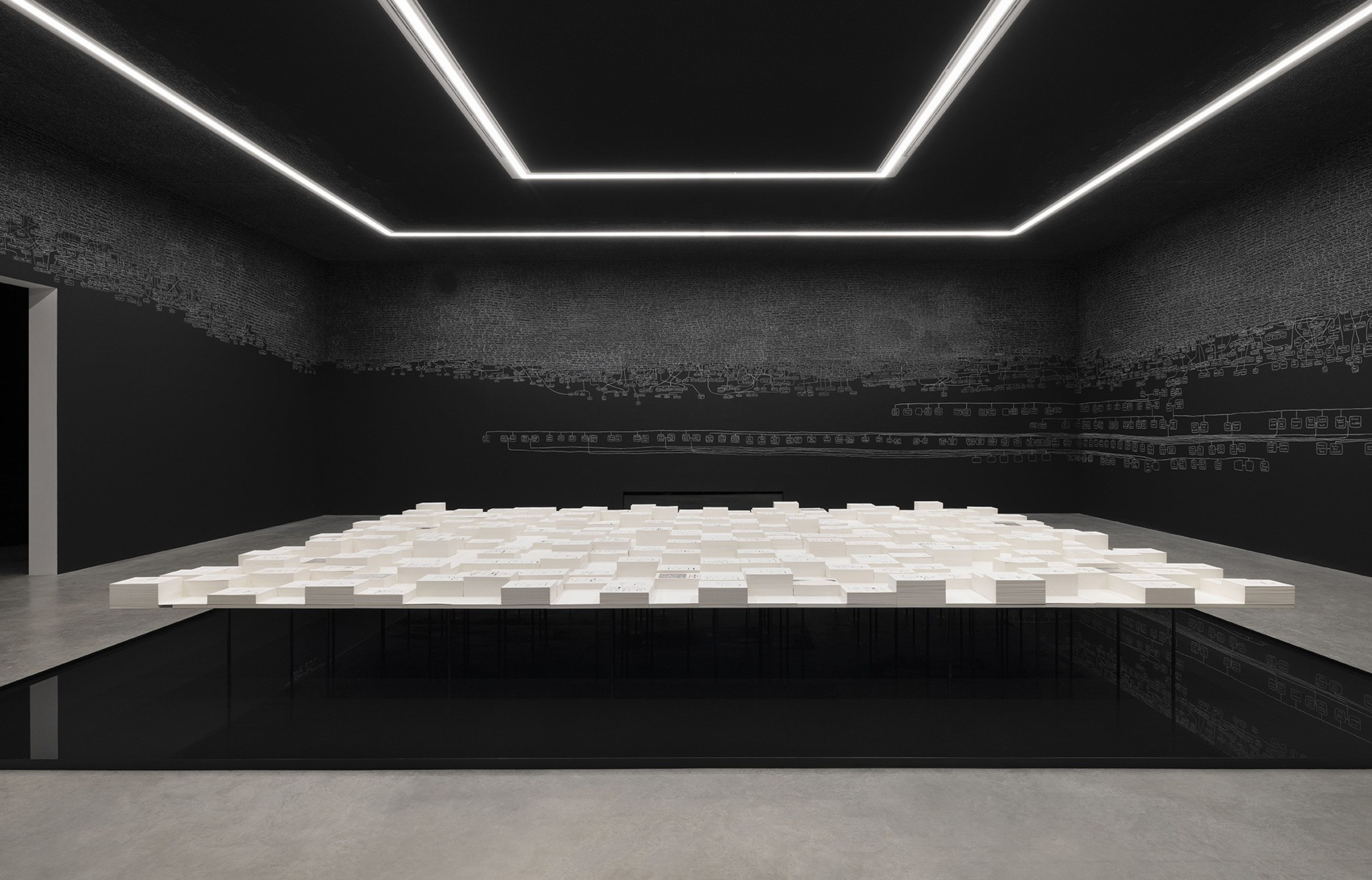
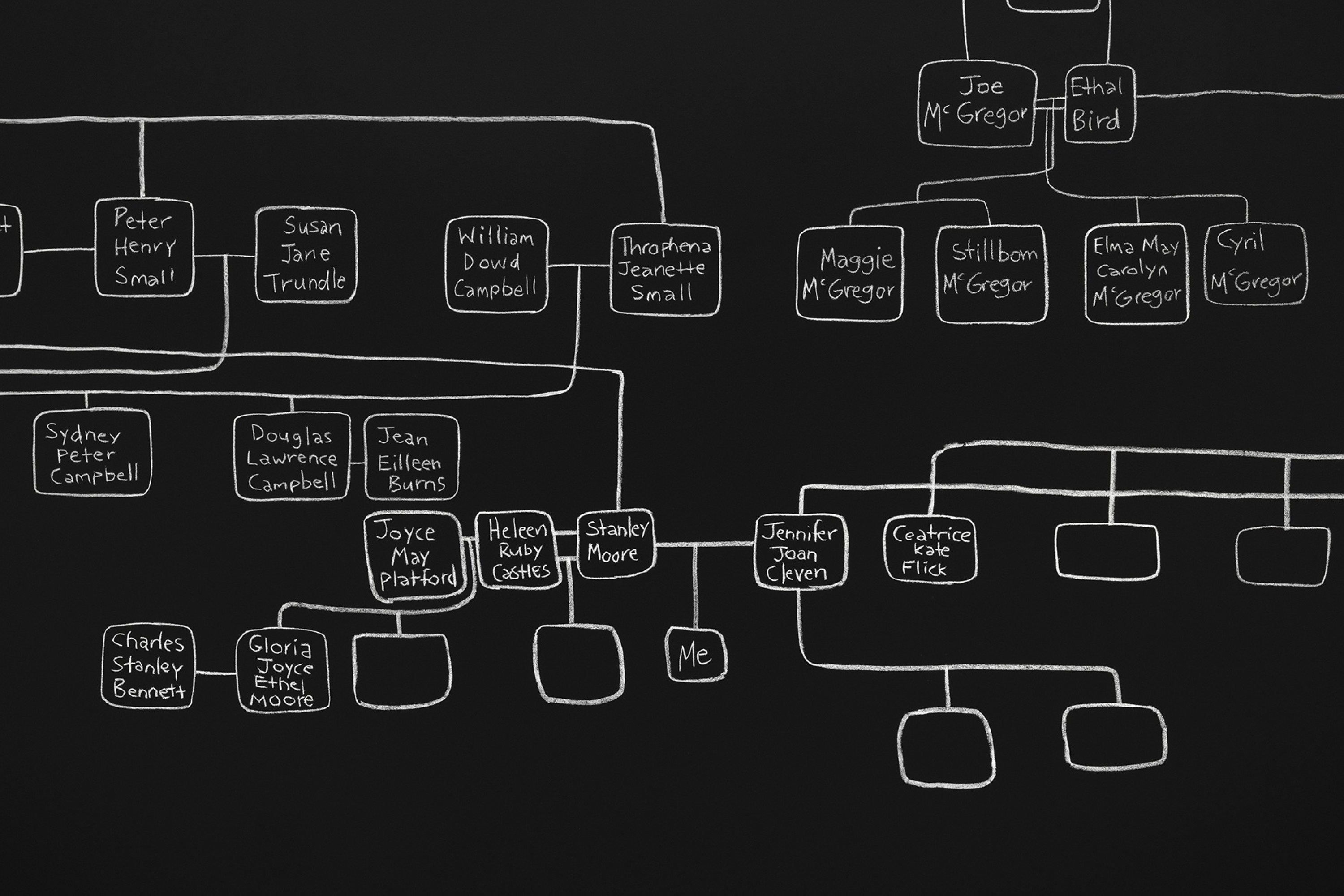
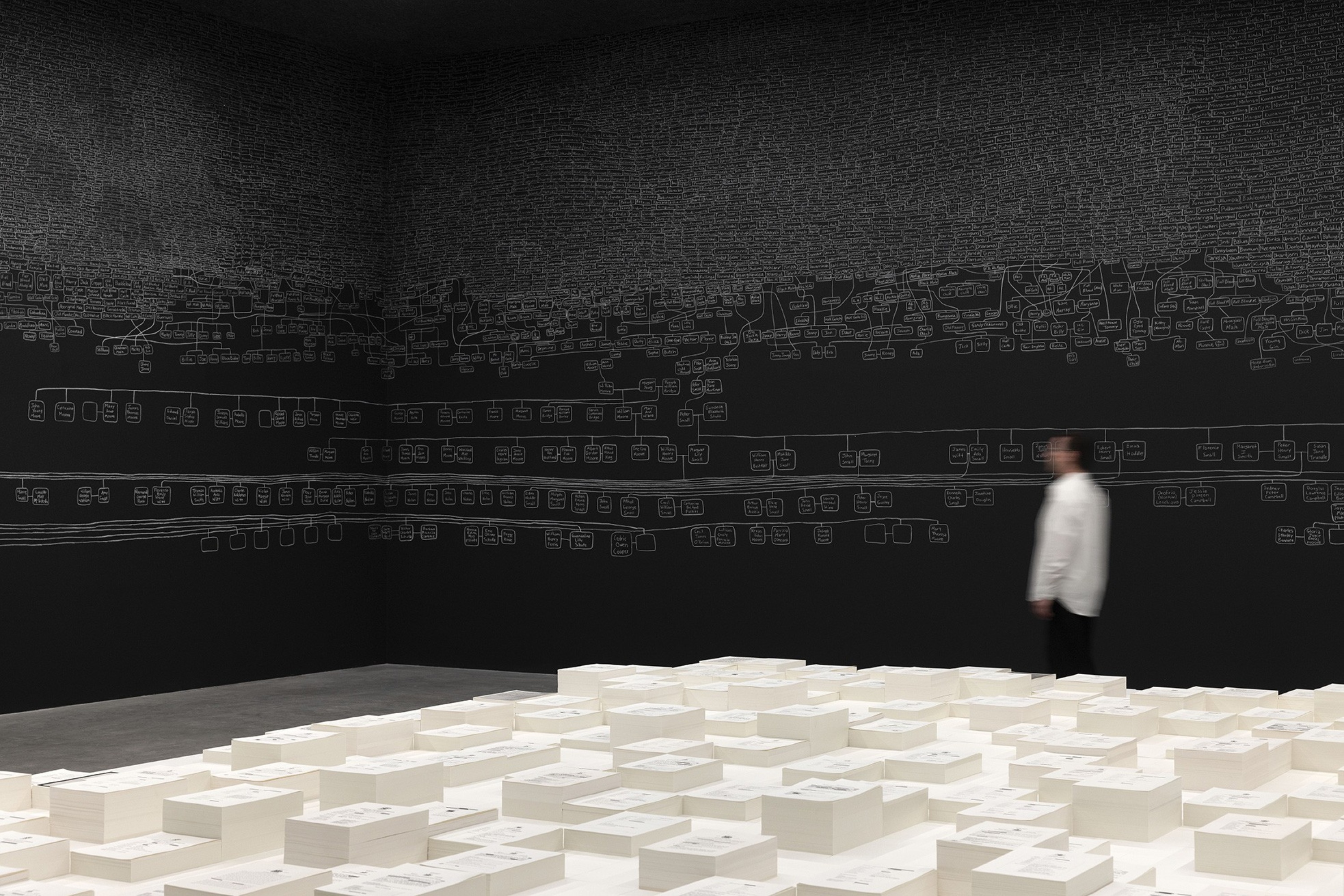
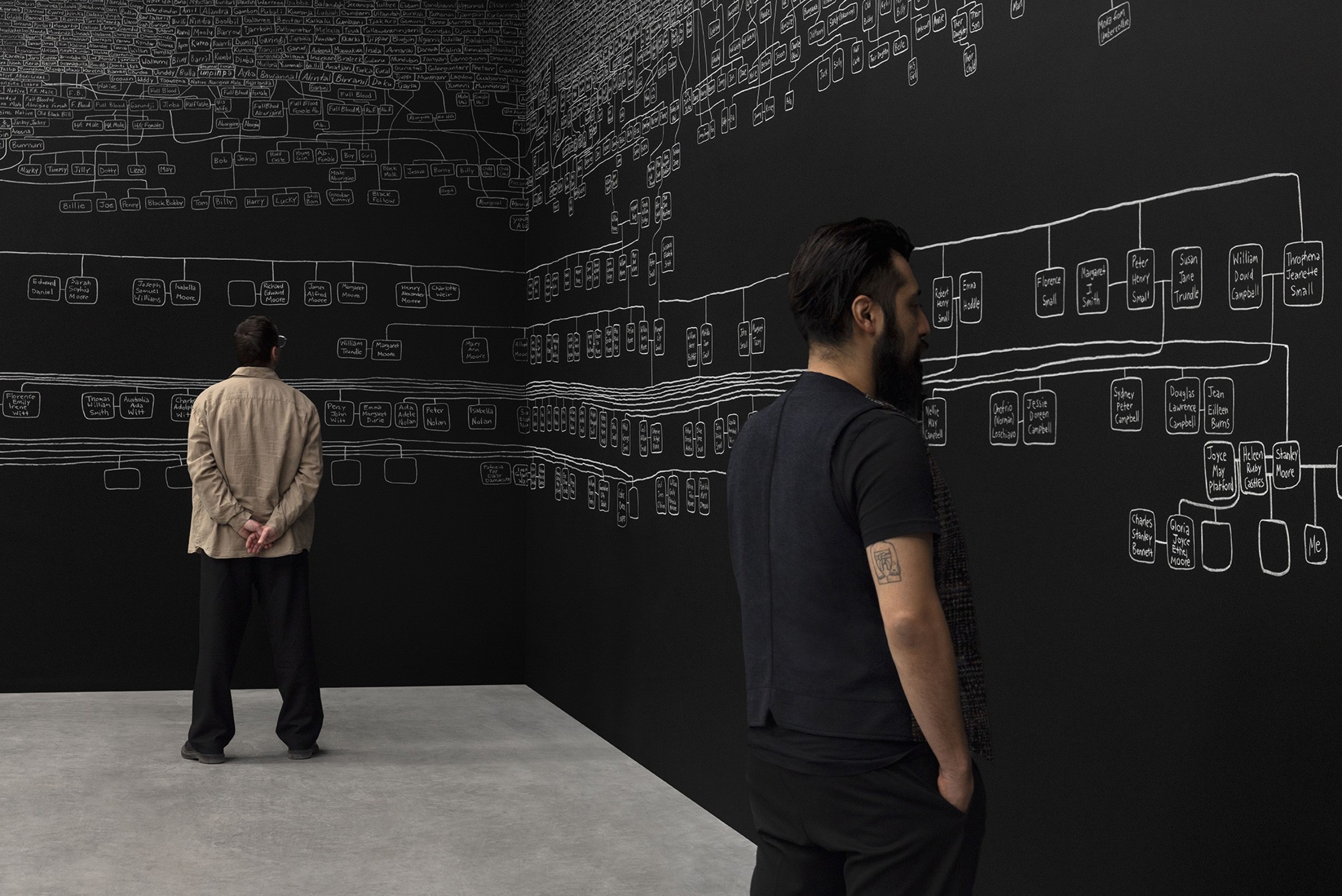
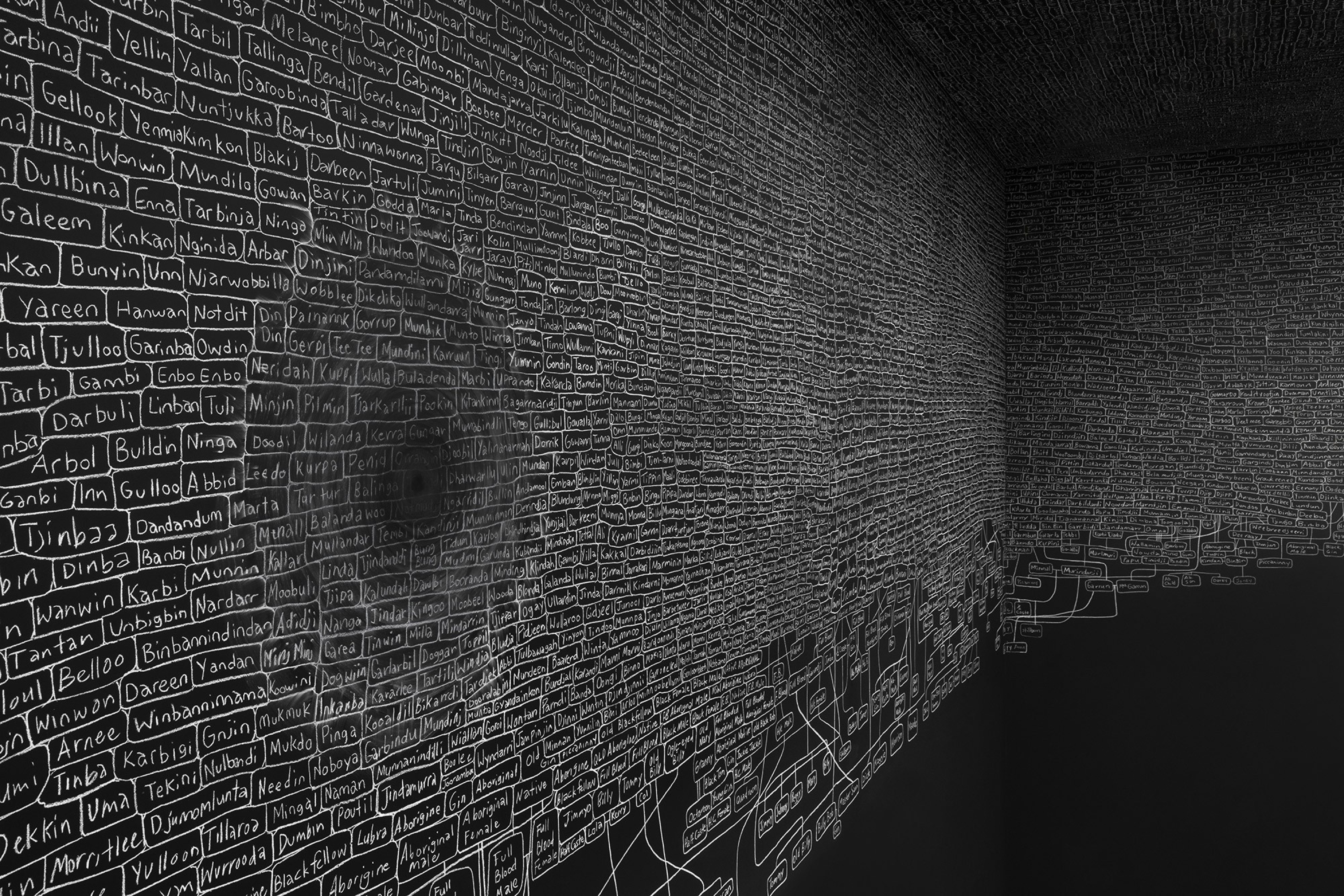
At the Venice Biennale 2024, Archie Moore’s Kith and Kin arrived like a quiet weather system, vast, intimate, and almost impossible to take in at once. A hand-drawn genealogical chart stretches across walls and ceiling in chalk, mapping deep time across more than 2,400 generations and roughly 65,000 years, reaching beyond human lineage to include animals, plants, and Country itself. It is both an artwork and, in a rare way, a lived act of information design, a visual language built to hold what words alone struggle to carry.
Semi Permanent met with Ellie Buttrose, curator at QAGOMA (Queensland Art Gallery of Modern Art), who worked closely with Archie on the Venice presentation, to discuss time, memory, rupture, and what it takes to draw something this big by hand.
A conversation with Ellie Buttrose on Archie Moore’s Kith and Kin
SP: Kith and Kin can be seen as an extraordinary piece of information design and art. Information design is about making complex systems visually graspable; seeing is more powerful than reading. What felt most important to Archie about making this legible?
EB: That was really key for Archie. He wanted to make 65,000 years visual and comprehensible. What does 65,000 years even look like?
We can picture specific points in history, the 15th century from period dramas, or the pyramids 4,000 years ago. But 10,000 years, 30,000 years, 65,000 years, that is something else. By giving people an image, you allow them to see and acknowledge, and really grapple with what that length of connection means.
SP: Long before Western philosophy gave us a neat “past, present, future,” many Indigenous cultures hold more layered relationships to time, in which different timeframes can coexist. For someone like me, that’s hard to truly understand intellectually. Does standing inside the pavilion make it feel more than it explains?
EB: Yes. When you’re in the space, you’re surrounded by ancestors over 65,000 years, which creates a feeling of coexistence. They don’t feel “behind” you. They feel right there with you.
And those ancestors aren’t only people. Archie has written the names of animals, plants, and places in Country. If those ancestors are present in the now, then the idea of family extends beyond the human.
Also, the family tree runs onto the ceiling, not just the walls. It becomes almost celestial. When we think about deep time and the cosmos, Archie is also referencing how we look to the stars, and even the dark spaces between them, which he speaks about as resting places. In that way, the work is not art about art. It’s art about the world.
“Kith and Kin is a memorial dedicated to every living thing that has ever existed; it is a space for quiet reflection on the past, the present, and the future.”
— Archie Moore.
SP: The voids, the holes, are they connected to massacres?
EB: Yes. There are different kinds of holes in the space. Archie speaks about them as representing massacres of First Nations people, but also the arrival of disease. And the deliberate destruction of records, and how that breaks apart families.
SP: Another thing I admire is the sheer commitment to drawing this by hand in chalk. Anyone who has ever started a physically demanding project knows that moment, halfway in, where you think, what am I doing, and then, I can’t stop now. What did it take to make this real?
EB: There were definitely moments where it felt like a lot, because it was a lot. Archie went very inward making this work.
But the most challenging part was the ceiling. Drawing on your back, upside down, is really difficult. There were breaks every half hour. There were stretches. There were physiotherapist appointments. It was psychologically tough to know he would have to do that for weeks.
But there’s also the thing about the first day always being the hardest. Once you get into a rhythm, it gets faster. You learn how to hold yourself, how to keep going. Archie said he felt like Michelangelo.
“There were breaks every half hour. There were stretches. There were physiotherapist appointments. It was psychologically tough to know that he would have to do that for weeks.” — Ellie Buttrose.
著者: Chris Baker
編集: Ana Arriola-Kanada
フィーチャード・クオート: 「Kith and Kinは、かつて存在したあらゆる生きもののための追悼碑です。過去、現在、未来に静かに向き合うための場所でもあります。」— Archie Moore
ある作品は、部屋に“置かれる”のではなく、部屋の呼吸を変えてしまう。
ヴェネチア・ビエンナーレ2024で、Archie MooreのKith and Kinは、静かな気象のように立ち上がりました。巨大で、親密で、そして一度では受け止めきれない。壁から天井にまで広がるチョークの手描きは、2,400世代以上, 約65,000年という深い時間を可視化し、人間の血縁だけでなく、動物や植物、そしてカントリー(Country)そのものへと“家族”の輪郭をひろげていきます。
それはアートであると同時に、稀有な意味での情報デザインでもあります。言葉だけでは抱えきれないものを、視覚言語として成立させる試み。
Semi Permanentは、ヴェネチアでの展示に深く関わった**QAGOMA(Queensland Art Gallery of Modern Art)**のキュレーター、Ellie Buttroseに話を聞きました。時間、記憶、断絶、そしてこれほど大きなものを“手で描く”ということについて。
Ellie Buttrose に聞く、Archie Moore『Kith and Kin』
SP: Kith and Kinは、圧倒的な情報デザインとしても、アートとしても読める作品です。情報デザインは、複雑なものを一目で掴める形にする営みでもあります。Archieにとって、「見える形にする」ことの意味は何だったのでしょう?
EB: そこは本当に重要でした。Archieは65,000年という時間を、視覚的に、そしてある程度“理解できる”形にしたかったんです。そもそも65,000年って、どんな見え方をするのか。
15世紀なら時代劇で想像できるし、ピラミッドなら4,000年前という距離感も掴める。でも、10,000年、30,000年、65,000年となると別の領域です。イメージとして提示されることで、人はその“つながりの長さ”を、認めて、受け止めて、向き合えるようになる。私はそう感じます。
SP: 西洋的な「過去・現在・未来」という直線的な時間観とは違って、先住民文化には、複数の時間が現在に重なり合うような感覚がありますよね。理屈では分かっても、身体で分かるのは難しい。そのパビリオンの中に立つことで、それが“説明”ではなく“体感”になるのでしょうか?
EB: はい。空間の中で、65,000年分の祖先たちに囲まれると、時間が「背後にあるもの」ではなく、「今ここに共存しているもの」に変わっていく感覚があります。
そして祖先は、人だけではありません。Archieは動物や植物、そしてカントリー(Country)の場所の名前も書いている。もし祖先が“今”にいるのなら、家族という概念は人間の外側へも拡張されていきます。
さらに、家系図は壁だけでなく天井まで伸びている。どこか天体のようにも見える。宇宙や深い時間を思うとき、Archieは星を見上げる感覚や、星と星のあいだの暗がり, そこを彼は“休息の場所”として語ります。だからこの作品は、アートについてのアートではなく、世界についてのアートなんです。
「Kith and Kinは、かつて存在したあらゆる生きもののための追悼碑です。過去、現在、未来に静かに向き合うための場所でもあります。」— Archie Moore
SP: 空間に空いた“穴”のような部分は、虐殺と関係がありますか?
EB: はい。空間にはいくつか種類の異なる“穴”があります。Archieはそれを、ファースト・ネーションズの人々に対する虐殺だけでなく、疫病の到来も含めたものとして語っています。そして、記録が意図的に破壊されてきたこと, それが家族を分断してしまうことも。
SP: もうひとつ心を打たれるのが、チョークでこれほど巨大なものを“手で描く”という執念です。途中で「何やってるんだろう」と思っても、もう止まれない, そういう経験は誰にでもあると思う。実際、どれほどの時間と体力が必要だったのでしょう?
EB: もちろん “これは大変だ” という瞬間はありました。というか、ずっと大変だった。Archieは作品制作中、とても内側へ潜っていくような状態だったと思います。
でも一番きつかったのは天井です。仰向けで、逆さまに描く。身体的に本当に厳しい。30分ごとに休憩して、ストレッチして、理学療法のアポイントも入れていました。何週間もそれを続けると分かっていること自体が、精神的にも相当きつい。
ただ、最初の日がいちばん大変で、そこを越えるとリズムが生まれて、少しずつ速くなっていくんです。身体の使い方も分かってくる。Archieは「ミケランジェロみたいだった」と言っていました。
「30分ごとに休憩があって、ストレッチもして、理学療法の予約も入れていました。何週間も続けると分かっていることが、精神的にとてもきつかった。」— Ellie Buttrose
constellations
SHIBUYA
SPECULATIVE FUTURES
NIGHTSHIFT SHAKEDOWN
FRIENDS OF
FUTURE OF
THIRDSPACE THIRDWEEKS
MOMENTS
held in sound


COLLECTIVE
yes,
Legal
Commercial Disclosure
Code of Conduct
privacy policy
Liability & Risk
Media Release
subscribe


© Semi Permanent / TOKYO SALONE

Tokyo salone
NOURISH
stories
interview
Venice Biennale winner Archie Moore is also the greatest graphic designer ever
Written by Chris Bake / Edited by Ana Arriola-Kanada
“Kith and Kin is a memorial dedicated to every living thing that has ever existed; it is a space for quiet reflection on the past, the present, and the future.”
— Archie Moore
Some works don’t just sit in a room; they change the room.
At the Venice Biennale 2024, Archie Moore’s Kith and Kin arrived like a quiet weather system, vast, intimate, and almost impossible to take in at once. A hand-drawn genealogical chart stretches across walls and ceiling in chalk, mapping deep time across more than 2,400 generations and roughly 65,000 years, reaching beyond human lineage to include animals, plants, and Country itself. It is both an artwork and, in a rare way, a lived act of information design, a visual language built to hold what words alone struggle to carry.
Semi Permanent met with Ellie Buttrose, curator at QAGOMA (Queensland Art Gallery of Modern Art), who worked closely with Archie on the Venice presentation, to discuss time, memory, rupture, and what it takes to draw something this big by hand.
A conversation with Ellie Buttrose on Archie Moore’s Kith and Kin
SP: Kith and Kin can be seen as an extraordinary piece of information design and art. Information design is about making complex systems visually graspable; seeing is more powerful than reading. What felt most important to Archie about making this legible?
EB: That was really key for Archie. He wanted to make 65,000 years visual and comprehensible. What does 65,000 years even look like?
We can picture specific points in history, the 15th century from period dramas, or the pyramids 4,000 years ago. But 10,000 years, 30,000 years, 65,000 years, that is something else. By giving people an image, you allow them to see and acknowledge, and really grapple with what that length of connection means.
SP: Long before Western philosophy gave us a neat “past, present, future,” many Indigenous cultures hold more layered relationships to time, in which different timeframes can coexist. For someone like me, that’s hard to truly understand intellectually. Does standing inside the pavilion make it feel more than it explains?
EB: Yes. When you’re in the space, you’re surrounded by ancestors over 65,000 years, which creates a feeling of coexistence. They don’t feel “behind” you. They feel right there with you.
And those ancestors aren’t only people. Archie has written the names of animals, plants, and places in Country. If those ancestors are present in the now, then the idea of family extends beyond the human.
Also, the family tree runs onto the ceiling, not just the walls. It becomes almost celestial. When we think about deep time and the cosmos, Archie is also referencing how we look to the stars, and even the dark spaces between them, which he speaks about as resting places. In that way, the work is not art about art. It’s art about the world.
“Kith and Kin is a memorial dedicated to every living thing that has ever existed; it is a space for quiet reflection on the past, the present, and the future.”
— Archie Moore.
SP: The voids, the holes, are they connected to massacres?
EB: Yes. There are different kinds of holes in the space. Archie speaks about them as representing massacres of First Nations people, but also the arrival of disease. And the deliberate destruction of records, and how that breaks apart families.
SP: Another thing I admire is the sheer commitment to drawing this by hand in chalk. Anyone who has ever started a physically demanding project knows that moment, halfway in, where you think, what am I doing, and then, I can’t stop now. What did it take to make this real?
EB: There were definitely moments where it felt like a lot, because it was a lot. Archie went very inward making this work.
But the most challenging part was the ceiling. Drawing on your back, upside down, is really difficult. There were breaks every half hour. There were stretches. There were physiotherapist appointments. It was psychologically tough to know he would have to do that for weeks.
But there’s also the thing about the first day always being the hardest. Once you get into a rhythm, it gets faster. You learn how to hold yourself, how to keep going. Archie said he felt like Michelangelo.
“There were breaks every half hour. There were stretches. There were physiotherapist appointments. It was psychologically tough to know that he would have to do that for weeks.” — Ellie Buttrose.
著者: Chris Baker
編集: Ana Arriola-Kanada
フィーチャード・クオート: 「Kith and Kinは、かつて存在したあらゆる生きもののための追悼碑です。過去、現在、未来に静かに向き合うための場所でもあります。」— Archie Moore
ある作品は、部屋に“置かれる”のではなく、部屋の呼吸を変えてしまう。
ヴェネチア・ビエンナーレ2024で、Archie MooreのKith and Kinは、静かな気象のように立ち上がりました。巨大で、親密で、そして一度では受け止めきれない。壁から天井にまで広がるチョークの手描きは、2,400世代以上, 約65,000年という深い時間を可視化し、人間の血縁だけでなく、動物や植物、そしてカントリー(Country)そのものへと“家族”の輪郭をひろげていきます。
それはアートであると同時に、稀有な意味での情報デザインでもあります。言葉だけでは抱えきれないものを、視覚言語として成立させる試み。
Semi Permanentは、ヴェネチアでの展示に深く関わった**QAGOMA(Queensland Art Gallery of Modern Art)**のキュレーター、Ellie Buttroseに話を聞きました。時間、記憶、断絶、そしてこれほど大きなものを“手で描く”ということについて。
Ellie Buttrose に聞く、Archie Moore『Kith and Kin』
SP: Kith and Kinは、圧倒的な情報デザインとしても、アートとしても読める作品です。情報デザインは、複雑なものを一目で掴める形にする営みでもあります。Archieにとって、「見える形にする」ことの意味は何だったのでしょう?
EB: そこは本当に重要でした。Archieは65,000年という時間を、視覚的に、そしてある程度“理解できる”形にしたかったんです。そもそも65,000年って、どんな見え方をするのか。
15世紀なら時代劇で想像できるし、ピラミッドなら4,000年前という距離感も掴める。でも、10,000年、30,000年、65,000年となると別の領域です。イメージとして提示されることで、人はその“つながりの長さ”を、認めて、受け止めて、向き合えるようになる。私はそう感じます。
SP: 西洋的な「過去・現在・未来」という直線的な時間観とは違って、先住民文化には、複数の時間が現在に重なり合うような感覚がありますよね。理屈では分かっても、身体で分かるのは難しい。そのパビリオンの中に立つことで、それが“説明”ではなく“体感”になるのでしょうか?
EB: はい。空間の中で、65,000年分の祖先たちに囲まれると、時間が「背後にあるもの」ではなく、「今ここに共存しているもの」に変わっていく感覚があります。
そして祖先は、人だけではありません。Archieは動物や植物、そしてカントリー(Country)の場所の名前も書いている。もし祖先が“今”にいるのなら、家族という概念は人間の外側へも拡張されていきます。
さらに、家系図は壁だけでなく天井まで伸びている。どこか天体のようにも見える。宇宙や深い時間を思うとき、Archieは星を見上げる感覚や、星と星のあいだの暗がり, そこを彼は“休息の場所”として語ります。だからこの作品は、アートについてのアートではなく、世界についてのアートなんです。
「Kith and Kinは、かつて存在したあらゆる生きもののための追悼碑です。過去、現在、未来に静かに向き合うための場所でもあります。」— Archie Moore
SP: 空間に空いた“穴”のような部分は、虐殺と関係がありますか?
EB: はい。空間にはいくつか種類の異なる“穴”があります。Archieはそれを、ファースト・ネーションズの人々に対する虐殺だけでなく、疫病の到来も含めたものとして語っています。そして、記録が意図的に破壊されてきたこと, それが家族を分断してしまうことも。
SP: もうひとつ心を打たれるのが、チョークでこれほど巨大なものを“手で描く”という執念です。途中で「何やってるんだろう」と思っても、もう止まれない, そういう経験は誰にでもあると思う。実際、どれほどの時間と体力が必要だったのでしょう?
EB: もちろん “これは大変だ” という瞬間はありました。というか、ずっと大変だった。Archieは作品制作中、とても内側へ潜っていくような状態だったと思います。
でも一番きつかったのは天井です。仰向けで、逆さまに描く。身体的に本当に厳しい。30分ごとに休憩して、ストレッチして、理学療法のアポイントも入れていました。何週間もそれを続けると分かっていること自体が、精神的にも相当きつい。
ただ、最初の日がいちばん大変で、そこを越えるとリズムが生まれて、少しずつ速くなっていくんです。身体の使い方も分かってくる。Archieは「ミケランジェロみたいだった」と言っていました。
「30分ごとに休憩があって、ストレッチもして、理学療法の予約も入れていました。何週間も続けると分かっていることが、精神的にとてもきつかった。」— Ellie Buttrose
constellations
SHIBUYA
SPECULATIVE FUTURES
NIGHTSHIFT SHAKEDOWN
FRIENDS OF
FUTURE OF
THIRDSPACE THIRDWEEKS
MOMENTS
held in sound
COLLECTIVE
yes,
Legal
Commercial Disclosure
Code of Conduct
privacy policy
Liability & Risk
Media Release
subscribe


© Semi Permanent / TOKYO SALONE
Tokyo salone
NOURISH
stories
interview
Venice Biennale winner Archie Moore is also the greatest graphic designer ever
Written by Chris Bake / Edited by Ana Arriola-Kanada
“Kith and Kin is a memorial dedicated to every living thing that has ever existed; it is a space for quiet reflection on the past, the present, and the future.”
— Archie Moore
Some works don’t just sit in a room; they change the room.
At the Venice Biennale 2024, Archie Moore’s Kith and Kin arrived like a quiet weather system, vast, intimate, and almost impossible to take in at once. A hand-drawn genealogical chart stretches across walls and ceiling in chalk, mapping deep time across more than 2,400 generations and roughly 65,000 years, reaching beyond human lineage to include animals, plants, and Country itself. It is both an artwork and, in a rare way, a lived act of information design, a visual language built to hold what words alone struggle to carry.
Semi Permanent met with Ellie Buttrose, curator at QAGOMA (Queensland Art Gallery of Modern Art), who worked closely with Archie on the Venice presentation, to discuss time, memory, rupture, and what it takes to draw something this big by hand.
A conversation with Ellie Buttrose on Archie Moore’s Kith and Kin
SP: Kith and Kin can be seen as an extraordinary piece of information design and art. Information design is about making complex systems visually graspable; seeing is more powerful than reading. What felt most important to Archie about making this legible?
EB: That was really key for Archie. He wanted to make 65,000 years visual and comprehensible. What does 65,000 years even look like?
We can picture specific points in history, the 15th century from period dramas, or the pyramids 4,000 years ago. But 10,000 years, 30,000 years, 65,000 years, that is something else. By giving people an image, you allow them to see and acknowledge, and really grapple with what that length of connection means.
SP: Long before Western philosophy gave us a neat “past, present, future,” many Indigenous cultures hold more layered relationships to time, in which different timeframes can coexist. For someone like me, that’s hard to truly understand intellectually. Does standing inside the pavilion make it feel more than it explains?
EB: Yes. When you’re in the space, you’re surrounded by ancestors over 65,000 years, which creates a feeling of coexistence. They don’t feel “behind” you. They feel right there with you.
And those ancestors aren’t only people. Archie has written the names of animals, plants, and places in Country. If those ancestors are present in the now, then the idea of family extends beyond the human.
Also, the family tree runs onto the ceiling, not just the walls. It becomes almost celestial. When we think about deep time and the cosmos, Archie is also referencing how we look to the stars, and even the dark spaces between them, which he speaks about as resting places. In that way, the work is not art about art. It’s art about the world.
“Kith and Kin is a memorial dedicated to every living thing that has ever existed; it is a space for quiet reflection on the past, the present, and the future.”
— Archie Moore.
SP: The voids, the holes, are they connected to massacres?
EB: Yes. There are different kinds of holes in the space. Archie speaks about them as representing massacres of First Nations people, but also the arrival of disease. And the deliberate destruction of records, and how that breaks apart families.
SP: Another thing I admire is the sheer commitment to drawing this by hand in chalk. Anyone who has ever started a physically demanding project knows that moment, halfway in, where you think, what am I doing, and then, I can’t stop now. What did it take to make this real?
EB: There were definitely moments where it felt like a lot, because it was a lot. Archie went very inward making this work.
But the most challenging part was the ceiling. Drawing on your back, upside down, is really difficult. There were breaks every half hour. There were stretches. There were physiotherapist appointments. It was psychologically tough to know he would have to do that for weeks.
But there’s also the thing about the first day always being the hardest. Once you get into a rhythm, it gets faster. You learn how to hold yourself, how to keep going. Archie said he felt like Michelangelo.
“There were breaks every half hour. There were stretches. There were physiotherapist appointments. It was psychologically tough to know that he would have to do that for weeks.” — Ellie Buttrose.
著者: Chris Baker
編集: Ana Arriola-Kanada
フィーチャード・クオート: 「Kith and Kinは、かつて存在したあらゆる生きもののための追悼碑です。過去、現在、未来に静かに向き合うための場所でもあります。」— Archie Moore
ある作品は、部屋に“置かれる”のではなく、部屋の呼吸を変えてしまう。
ヴェネチア・ビエンナーレ2024で、Archie MooreのKith and Kinは、静かな気象のように立ち上がりました。巨大で、親密で、そして一度では受け止めきれない。壁から天井にまで広がるチョークの手描きは、2,400世代以上, 約65,000年という深い時間を可視化し、人間の血縁だけでなく、動物や植物、そしてカントリー(Country)そのものへと“家族”の輪郭をひろげていきます。
それはアートであると同時に、稀有な意味での情報デザインでもあります。言葉だけでは抱えきれないものを、視覚言語として成立させる試み。
Semi Permanentは、ヴェネチアでの展示に深く関わった**QAGOMA(Queensland Art Gallery of Modern Art)**のキュレーター、Ellie Buttroseに話を聞きました。時間、記憶、断絶、そしてこれほど大きなものを“手で描く”ということについて。
Ellie Buttrose に聞く、Archie Moore『Kith and Kin』
SP: Kith and Kinは、圧倒的な情報デザインとしても、アートとしても読める作品です。情報デザインは、複雑なものを一目で掴める形にする営みでもあります。Archieにとって、「見える形にする」ことの意味は何だったのでしょう?
EB: そこは本当に重要でした。Archieは65,000年という時間を、視覚的に、そしてある程度“理解できる”形にしたかったんです。そもそも65,000年って、どんな見え方をするのか。
15世紀なら時代劇で想像できるし、ピラミッドなら4,000年前という距離感も掴める。でも、10,000年、30,000年、65,000年となると別の領域です。イメージとして提示されることで、人はその“つながりの長さ”を、認めて、受け止めて、向き合えるようになる。私はそう感じます。
SP: 西洋的な「過去・現在・未来」という直線的な時間観とは違って、先住民文化には、複数の時間が現在に重なり合うような感覚がありますよね。理屈では分かっても、身体で分かるのは難しい。そのパビリオンの中に立つことで、それが“説明”ではなく“体感”になるのでしょうか?
EB: はい。空間の中で、65,000年分の祖先たちに囲まれると、時間が「背後にあるもの」ではなく、「今ここに共存しているもの」に変わっていく感覚があります。
そして祖先は、人だけではありません。Archieは動物や植物、そしてカントリー(Country)の場所の名前も書いている。もし祖先が“今”にいるのなら、家族という概念は人間の外側へも拡張されていきます。
さらに、家系図は壁だけでなく天井まで伸びている。どこか天体のようにも見える。宇宙や深い時間を思うとき、Archieは星を見上げる感覚や、星と星のあいだの暗がり, そこを彼は“休息の場所”として語ります。だからこの作品は、アートについてのアートではなく、世界についてのアートなんです。
「Kith and Kinは、かつて存在したあらゆる生きもののための追悼碑です。過去、現在、未来に静かに向き合うための場所でもあります。」— Archie Moore
SP: 空間に空いた“穴”のような部分は、虐殺と関係がありますか?
EB: はい。空間にはいくつか種類の異なる“穴”があります。Archieはそれを、ファースト・ネーションズの人々に対する虐殺だけでなく、疫病の到来も含めたものとして語っています。そして、記録が意図的に破壊されてきたこと, それが家族を分断してしまうことも。
SP: もうひとつ心を打たれるのが、チョークでこれほど巨大なものを“手で描く”という執念です。途中で「何やってるんだろう」と思っても、もう止まれない, そういう経験は誰にでもあると思う。実際、どれほどの時間と体力が必要だったのでしょう?
EB: もちろん “これは大変だ” という瞬間はありました。というか、ずっと大変だった。Archieは作品制作中、とても内側へ潜っていくような状態だったと思います。
でも一番きつかったのは天井です。仰向けで、逆さまに描く。身体的に本当に厳しい。30分ごとに休憩して、ストレッチして、理学療法のアポイントも入れていました。何週間もそれを続けると分かっていること自体が、精神的にも相当きつい。
ただ、最初の日がいちばん大変で、そこを越えるとリズムが生まれて、少しずつ速くなっていくんです。身体の使い方も分かってくる。Archieは「ミケランジェロみたいだった」と言っていました。
「30分ごとに休憩があって、ストレッチもして、理学療法の予約も入れていました。何週間も続けると分かっていることが、精神的にとてもきつかった。」— Ellie Buttrose
constellations
SHIBUYA
SPECULATIVE FUTURES
NIGHTSHIFT SHAKEDOWN
FRIENDS OF
FUTURE OF
THIRDSPACE THIRDWEEKS
MOMENTS
held in sound
COLLECTIVE
yes,
Legal
Commercial Disclosure
Code of Conduct
privacy policy
Liability & Risk
Media Release
subscribe















© Semi Permanent / TOKYO SALONE