
Tokyo salone
NOURISH
STORIES
interview
Create and destroy
Written by Kåre Martens Jr. / Edited by Ana Arriola-Kanada
“Impermanence isn’t really a choice for us; it’s dictated by the materials we work with.”
— Marion Pinaffo
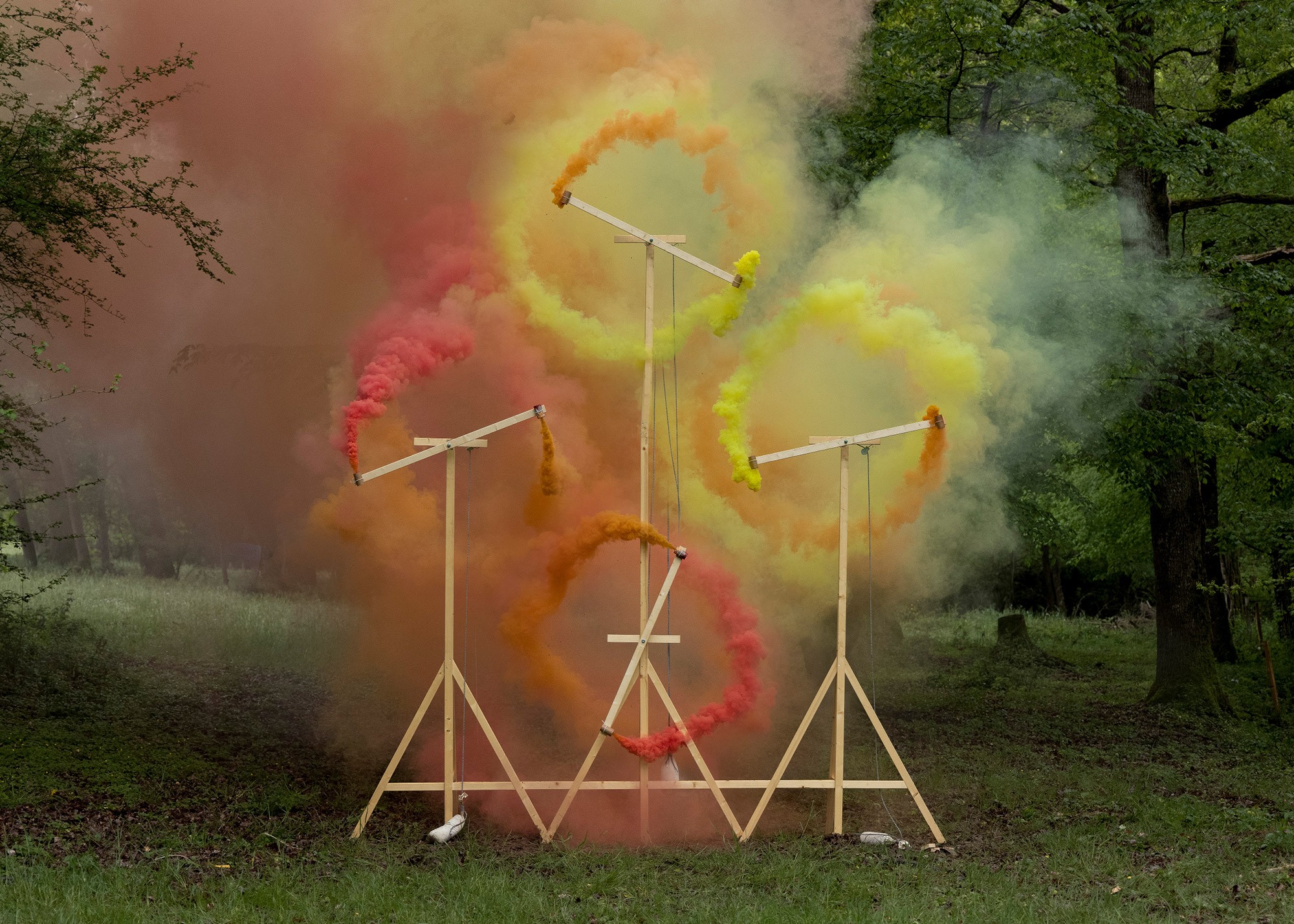
Smoke. Micro-architecture. Gelatin. Rhythm. Pyrotechnics. Polymers. In the studio of Marion Pinaffo and Raphaël Pluvinage, these aren’t “materials” so much as they are collaborators, moody ones, stubborn ones, occasionally miraculous ones.
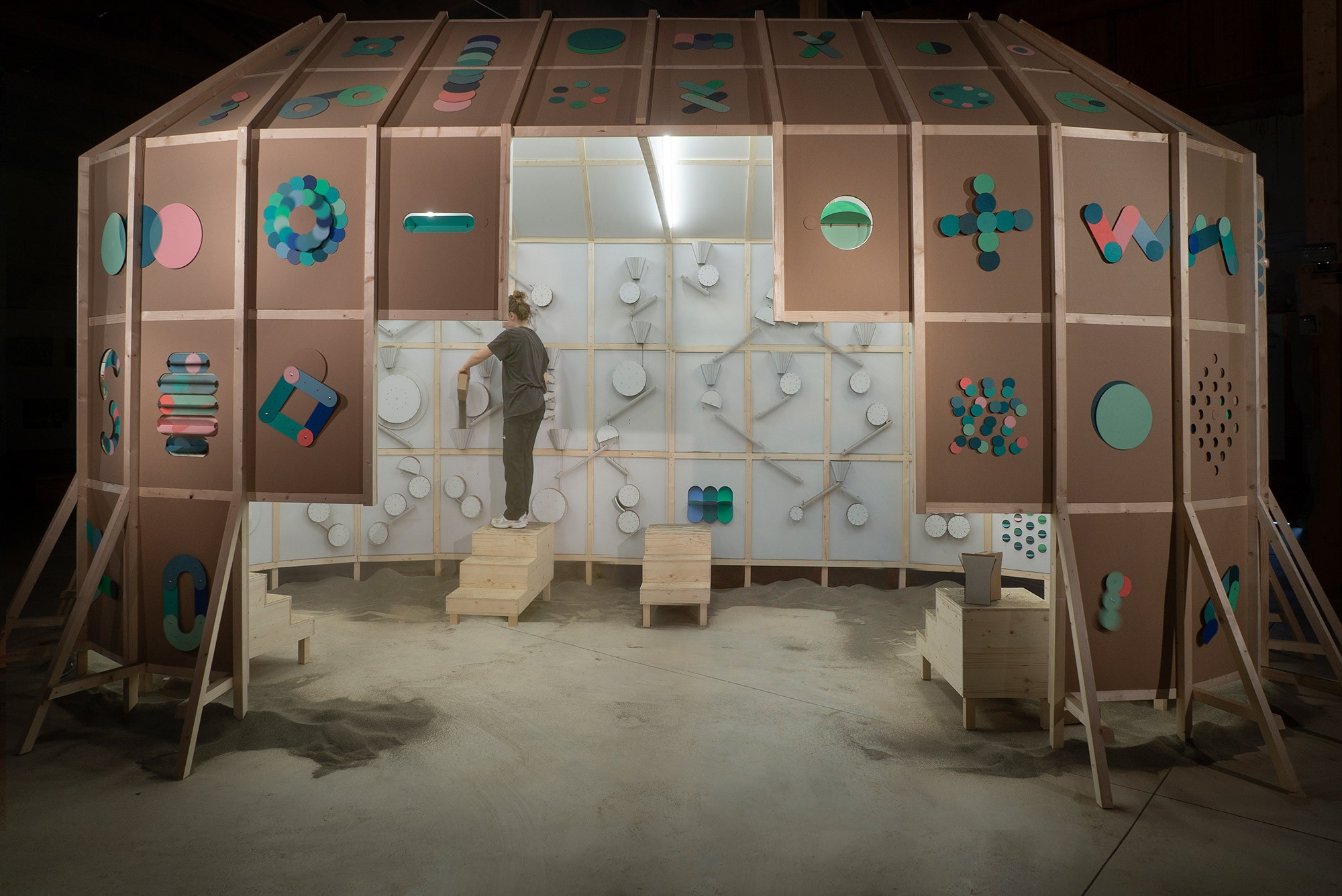
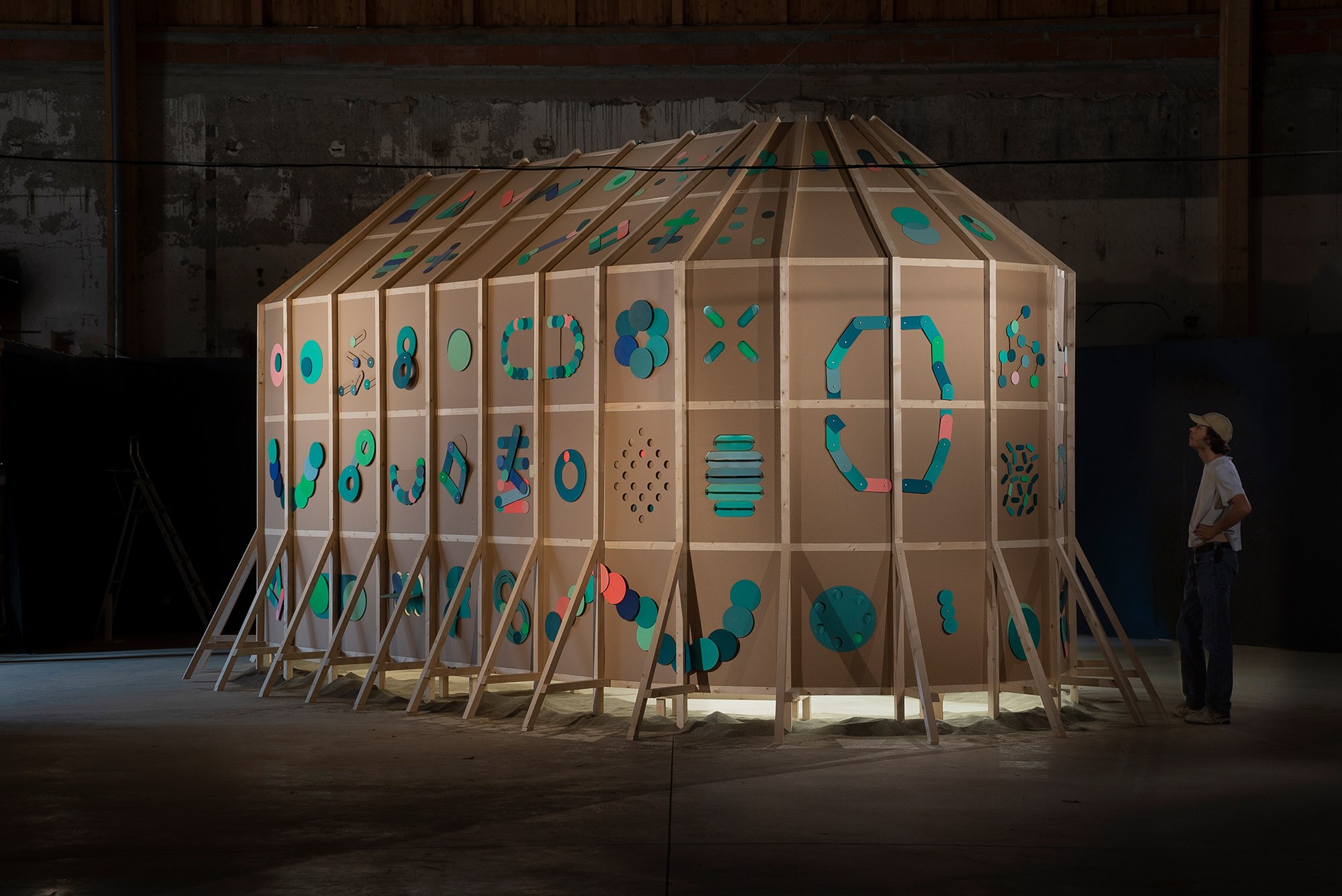
Since 2015, the Paris-based duo has been observing, manipulating, and gently provoking non-traditional matter, inviting it to behave just long enough to reveal something new. Their work has traveled the world, from the Centre Pompidou to the Triennale di Milano, to Design Museum Gent, and now, right here, in front of you.
What makes their practice quietly radical is not spectacle, though there is plenty of it. It’s the ethics of attention. The willingness to stand beside what can’t be fully controlled, and still build something precise, alive, and temporary.
Growing up, and the first sparks
SP: Tell me a little about where you both grew up, what it was like, and what you loved doing as kids.
Marion Pinaffo: I grew up surrounded by people who were passionate about culture, art, performing arts, creativity in general. So I spent a lot of time in museums, seeing shows, and also doing manual activities at home. But I grew up in the countryside, in a school environment where it was difficult to imagine paths outside the usual academic routes. It was during an open house visit to an Applied Arts high school in Toulouse that I discovered a path that suited me. That moment was decisive.
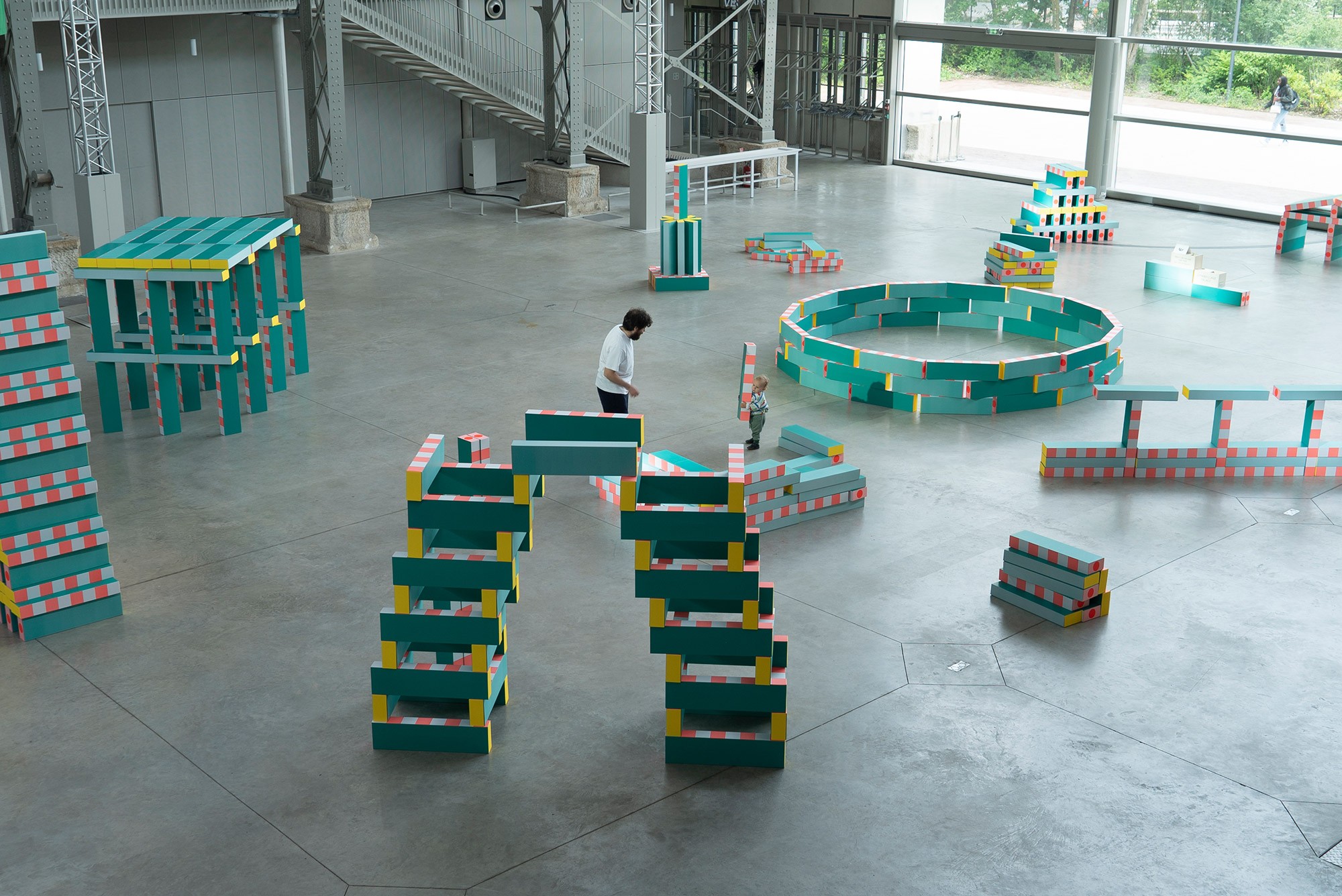
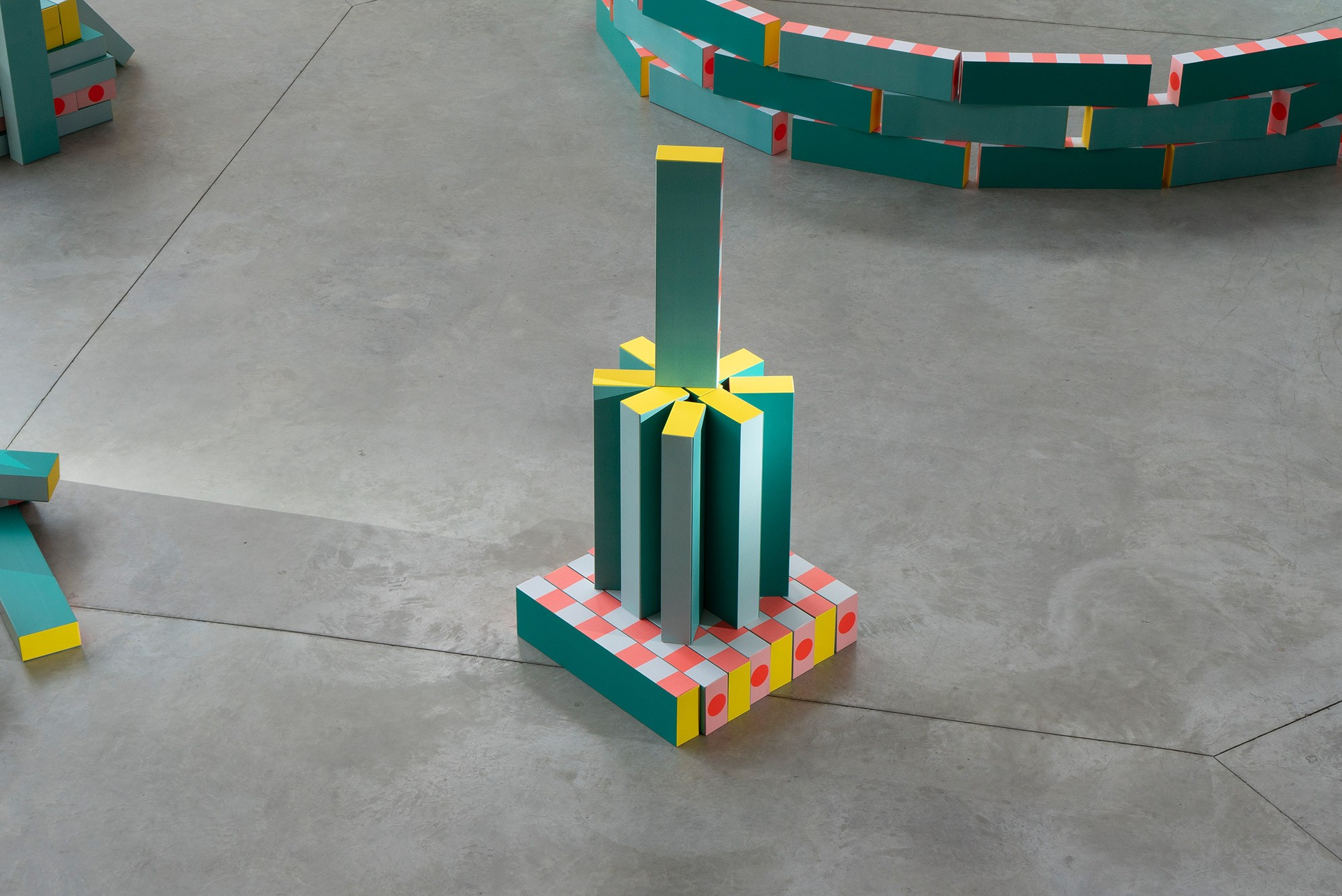
Raphaël Pluvinage: I grew up in a family of researchers, so science was always close. Until middle school, I wanted to become an architect, probably because I was obsessed with Lego. I had this huge table in my room covered in Lego, and I’d spend hours building worlds, houses, imaginary structures. That gave me a love for making, manipulating forms, and exploring construction in every possible way.
Systems thinking, science, and the pull between disciplines
SP: Your work often reminds me that whether you zoom out to the cosmic or in to the atomic, everything seems governed by systems, patterns, forces. Did you study science formally?
Raphaël: From the beginning, I was torn between science and art. I was good at math and physics, and societal pressure pushed me toward engineering. I completed the degree, but I never practiced, I realized it didn’t suit me. Still, I was fascinated by certain topics, technical systems, natural phenomena, and ways to represent them. That curiosity for representation, and for systems, continues to shape our work.
Marion: I didn’t follow scientific studies as such, but I think my curiosity for mechanisms and systems comes from Applied Arts training. We were taught to understand materials, forms, interactions, which is very systemic, almost mathematical. My family also shaped that. My father loves self-building. He can make anything, he even built a vehicle from scratch when I was little. There were always tools around, materials everywhere, and this underlying sense that making things yourself is possible, and not so far away.
Drawing, fire, and letting the material argue back
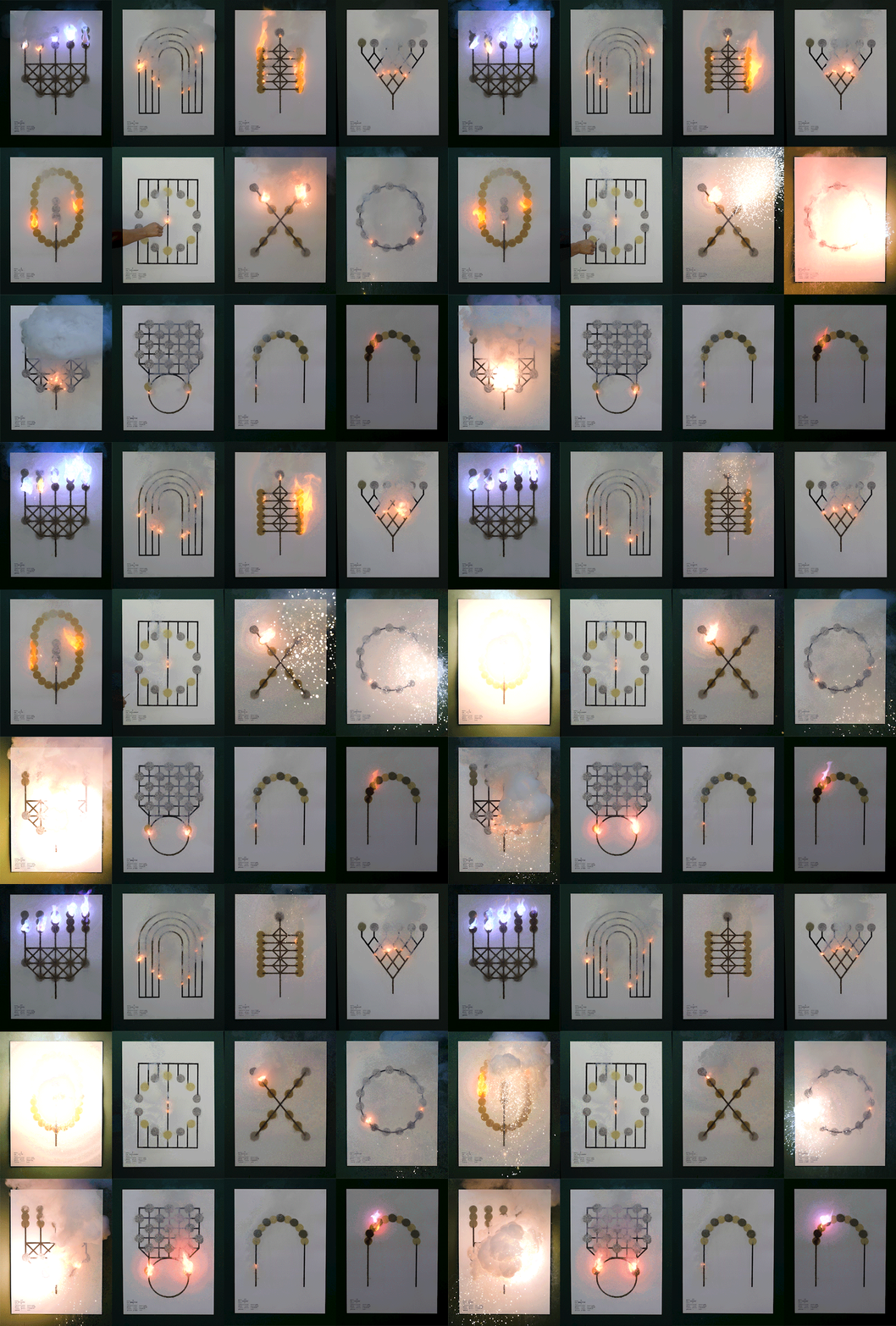
SP: I love the graphic nature of your work. It could stand as a two-dimensional drawing. But you’ve chosen the physical world, and you use fire, pyrotechnics, motion, to give the work energy. How did you arrive here?
Raphaël & Marion: We arrived through several paths. First, we’ve always been interested in working with scientific and technical phenomena, and in creating situations where spectators, or players, can approach them, see them differently, sometimes manipulate them. Our first project together, Papier Machine, a book of electronic toys printed with conductive ink and assembled by the user, came from this desire, to open a small door into the mysteries of electronics around us. Not didactically, not to explain, but to create curiosity, and offer a new perspective.
Even when we work with less “technological” materials, fire, pyrotechnics, a fabric moving in wind, it’s still about presenting a physical phenomenon in a new light.
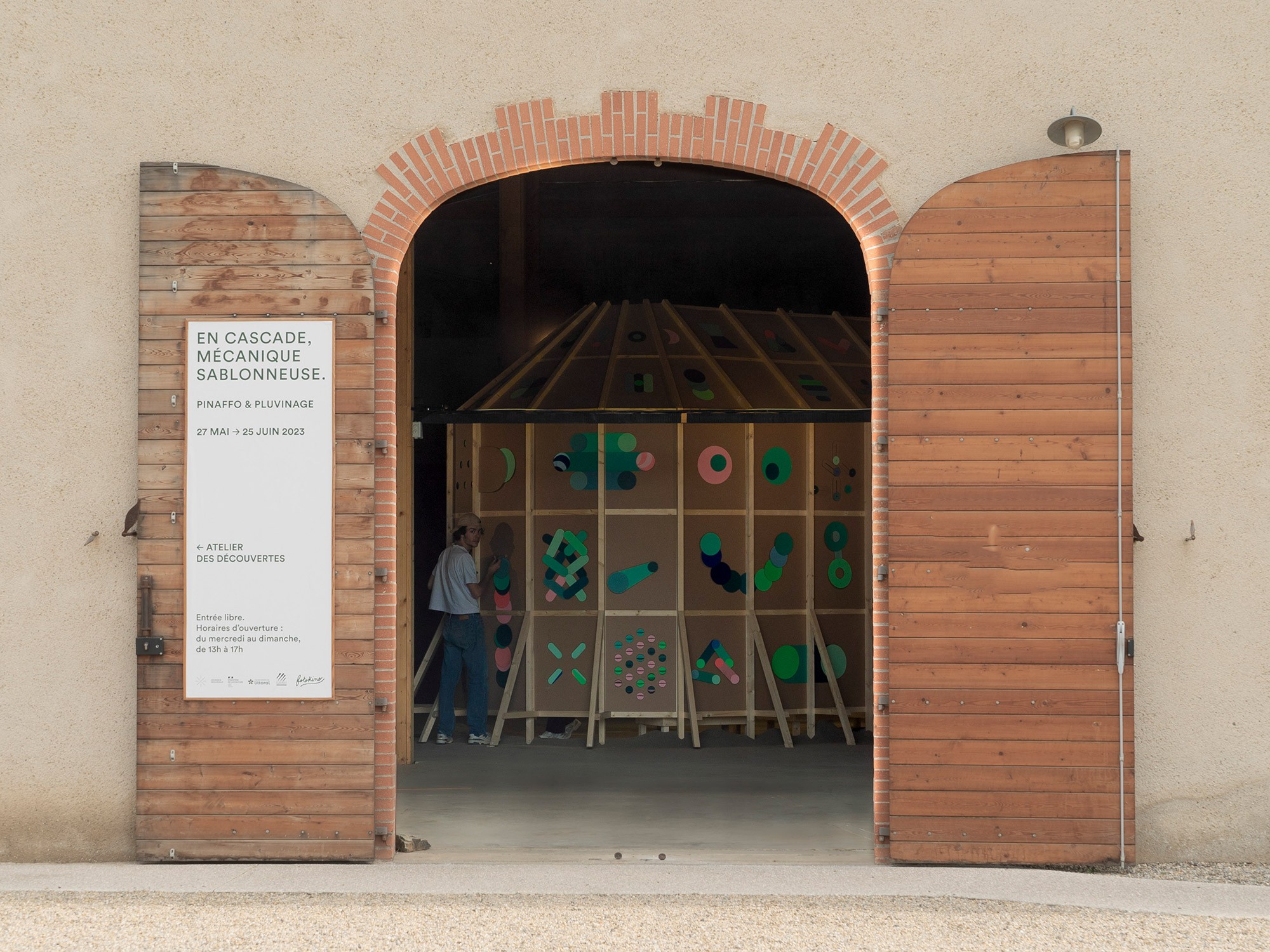
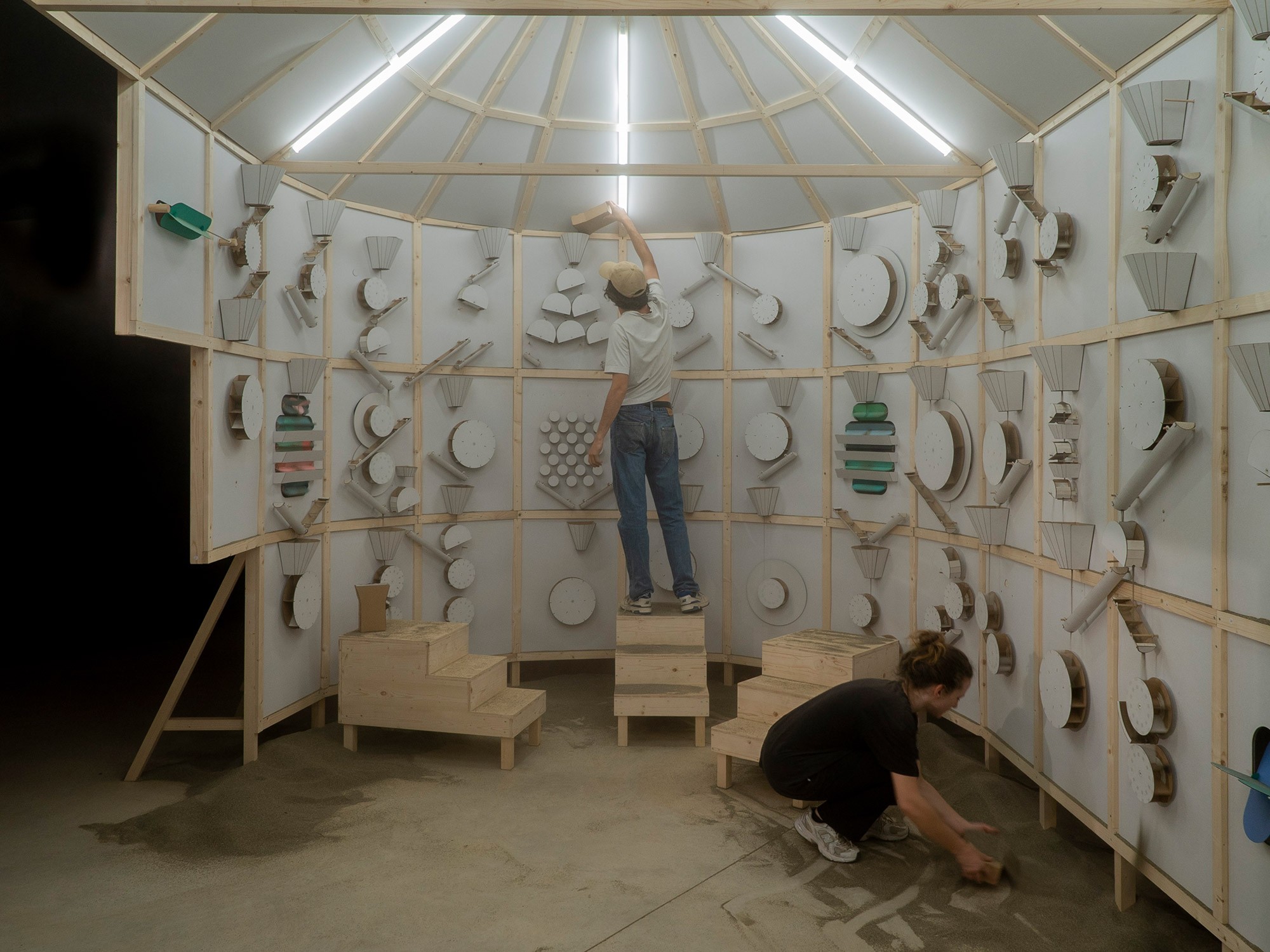
And then, there is our fascination with the tension between our gesture, our drawing, and the freedom of a material or an uncontrollable phenomenon. We’ve worked with jelly, sand, smoke, explosives, droplets of water. Many projects embody this confrontation, trying to control what cannot be controlled. It opens a completely new territory, where we can invent forms and approaches. We can’t fully rationalize the attraction. There’s probably a challenge in it, a personal test. But above all, it’s about building an experimental ground that hasn’t been explored yet, and searching for a specific kind of poetry.
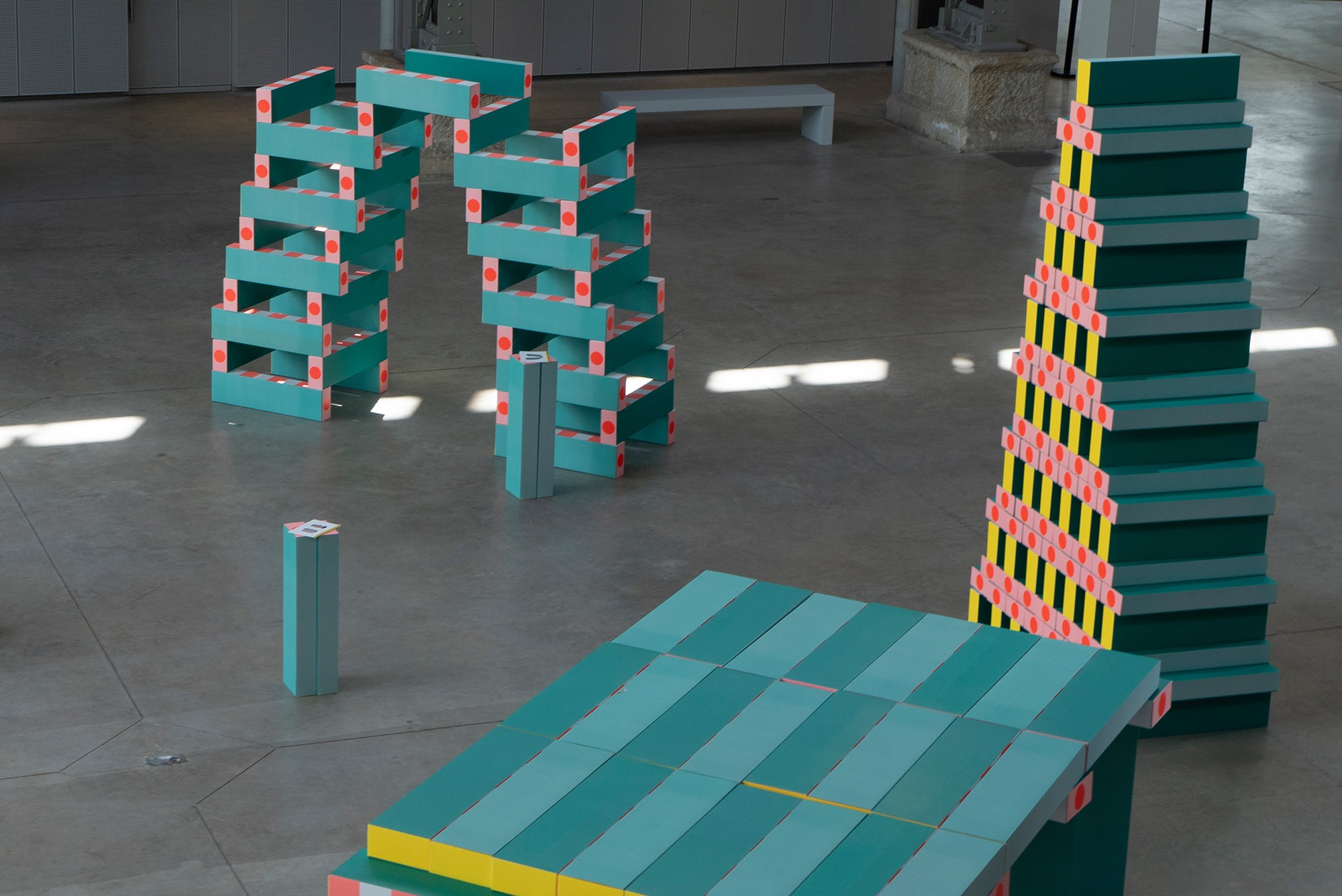
Failure as part of the studio’s rhythm
SP: Working physically seems both joyful and healthy, compared to living on a screen. But it must also be frustrating, because the real world doesn’t repeat like a simulation. What’s that balance like?
Raphaël & Marion: Working physically is essential. The workshop is a research space, each experiment feeds the next. Real materials bring unpredictability, humidity, temperature, wind, it can change everything. But that randomness is also what makes the work exciting.
We don’t reject computers or 3D simulation, we spend time anticipating and planning digitally. But we’re happy to have found a balance. Sitting in front of a screen all day would drive us crazy. Sometimes it’s also just pragmatic, for certain projects it would be longer, and sometimes nearly impossible, to rely on simulation instead of physical tests.
As for frustrations, there are many. When we’re exploring a phenomenon without knowing where it leads, there are far more failures than successes. It can be disheartening. Perseverance is essential. The flip side is the joy when something finally works, even briefly.
Later, when building the final installation, the frustration isn’t so much that the movement isn’t repeatable. It’s mastering all the parameters that could prevent the installation from functioning. We spend a lot of time, and stress, testing, anticipating worst-case scenarios.
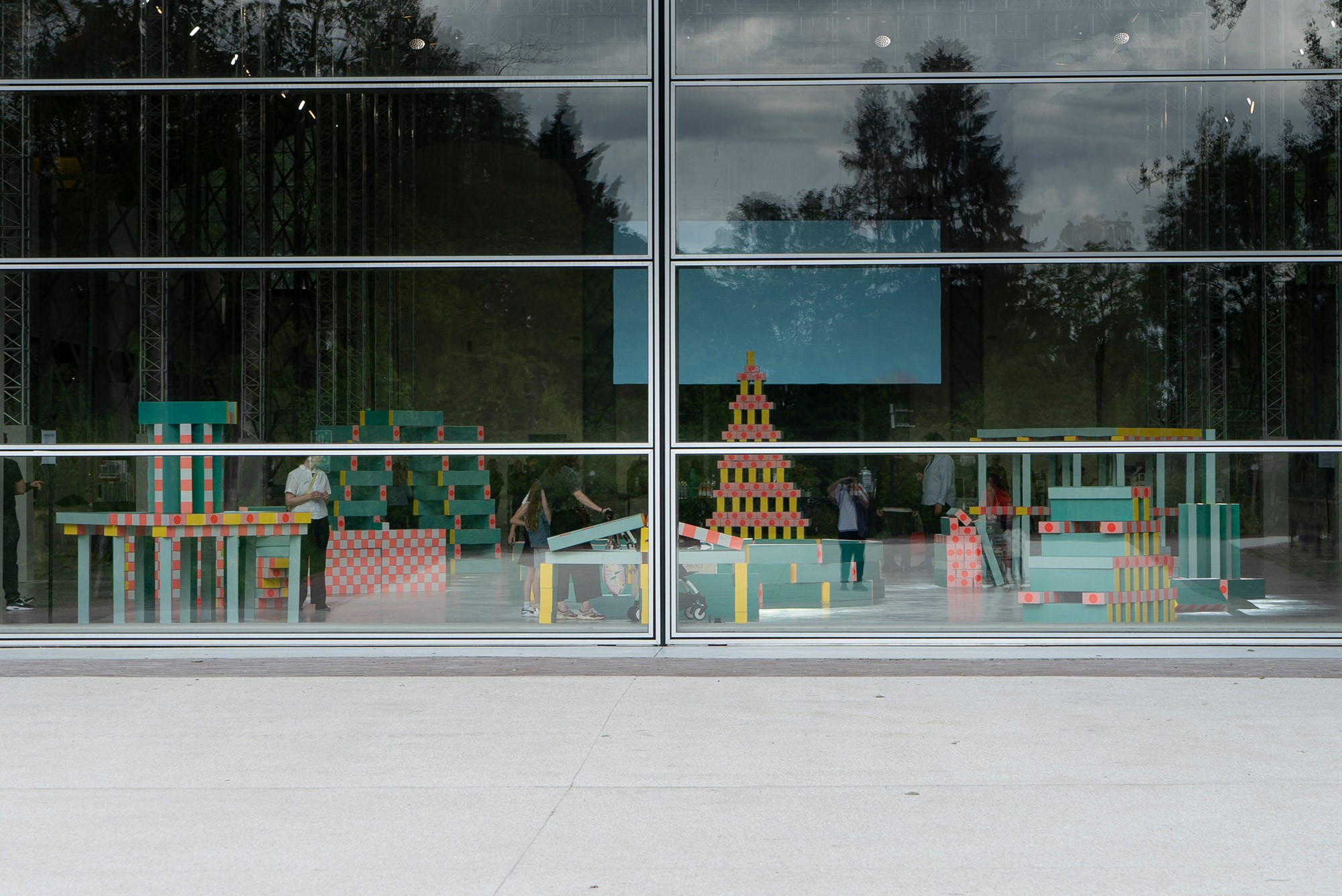
Impermanence, and why documentation is not a substitute
SP: Many pieces only live for a short time. How does that feel? Is it sad, or is it enough to know it worked, to record it, and let it go? Is the live moment more important than film?
Raphaël & Marion: Impermanence isn’t really a choice for us, it’s dictated by the materials. But that impermanence is never a reason to abandon a material or an idea. We approach new materials intuitively, we test, we experiment, and the first audience is ourselves. In a second phase, shaped by constraints, the final form takes shape.
Then we ask, how will this project meet its audience? Is it an object or a large installation? Can it be exhibited for months, or will it be a performance?
Sometimes this process leads to a result that lasts only a minute, shown in a restricted context. Film never replaces the live experience. But we film primarily for ourselves, to keep a tangible trace. Otherwise we’d be too sad to dismantle the installations without holding onto something from those ephemeral moments.
constellations
SHIBUYA
SPECULATIVE FUTURES
NIGHTSHIFT SHAKEDOWN
FRIENDS OF
FUTURE OF
THIRDSPACE THIRDWEEKS
MOMENTS
held in sound


COLLECTIVE
yes,
Legal
Commercial Disclosure
Code of Conduct
privacy policy
Liability & Risk
Media Release
subscribe


© Semi Permanent / TOKYO SALONE

Tokyo salone
NOURISH
stories
interview
Create and destroy
Written by Kåre Martens Jr. / Edited by Ana Arriola-Kanada
“Impermanence isn’t really a choice for us; it’s dictated by the materials we work with.”
— Marion Pinaffo
Smoke. Micro-architecture. Gelatin. Rhythm. Pyrotechnics. Polymers. In the studio of Marion Pinaffo and Raphaël Pluvinage, these aren’t “materials” so much as they are collaborators, moody ones, stubborn ones, occasionally miraculous ones.
Since 2015, the Paris-based duo has been observing, manipulating, and gently provoking non-traditional matter, inviting it to behave just long enough to reveal something new. Their work has traveled the world, from the Centre Pompidou to the Triennale di Milano, to Design Museum Gent, and now, right here, in front of you.
What makes their practice quietly radical is not spectacle, though there is plenty of it. It’s the ethics of attention. The willingness to stand beside what can’t be fully controlled, and still build something precise, alive, and temporary.
Growing up, and the first sparks
SP: Tell me a little about where you both grew up, what it was like, and what you loved doing as kids.
Marion Pinaffo: I grew up surrounded by people who were passionate about culture, art, performing arts, creativity in general. So I spent a lot of time in museums, seeing shows, and also doing manual activities at home. But I grew up in the countryside, in a school environment where it was difficult to imagine paths outside the usual academic routes. It was during an open house visit to an Applied Arts high school in Toulouse that I discovered a path that suited me. That moment was decisive.
Raphaël Pluvinage: I grew up in a family of researchers, so science was always close. Until middle school, I wanted to become an architect, probably because I was obsessed with Lego. I had this huge table in my room covered in Lego, and I’d spend hours building worlds, houses, imaginary structures. That gave me a love for making, manipulating forms, and exploring construction in every possible way.
Systems thinking, science, and the pull between disciplines
SP: Your work often reminds me that whether you zoom out to the cosmic or in to the atomic, everything seems governed by systems, patterns, forces. Did you study science formally?
Raphaël: From the beginning, I was torn between science and art. I was good at math and physics, and societal pressure pushed me toward engineering. I completed the degree, but I never practiced, I realized it didn’t suit me. Still, I was fascinated by certain topics, technical systems, natural phenomena, and ways to represent them. That curiosity for representation, and for systems, continues to shape our work.
Marion: I didn’t follow scientific studies as such, but I think my curiosity for mechanisms and systems comes from Applied Arts training. We were taught to understand materials, forms, interactions, which is very systemic, almost mathematical. My family also shaped that. My father loves self-building. He can make anything, he even built a vehicle from scratch when I was little. There were always tools around, materials everywhere, and this underlying sense that making things yourself is possible, and not so far away.
Drawing, fire, and letting the material argue back
SP: I love the graphic nature of your work. It could stand as a two-dimensional drawing. But you’ve chosen the physical world, and you use fire, pyrotechnics, motion, to give the work energy. How did you arrive here?
Raphaël & Marion: We arrived through several paths. First, we’ve always been interested in working with scientific and technical phenomena, and in creating situations where spectators, or players, can approach them, see them differently, sometimes manipulate them. Our first project together, Papier Machine, a book of electronic toys printed with conductive ink and assembled by the user, came from this desire, to open a small door into the mysteries of electronics around us. Not didactically, not to explain, but to create curiosity, and offer a new perspective.
Even when we work with less “technological” materials, fire, pyrotechnics, a fabric moving in wind, it’s still about presenting a physical phenomenon in a new light.
And then, there is our fascination with the tension between our gesture, our drawing, and the freedom of a material or an uncontrollable phenomenon. We’ve worked with jelly, sand, smoke, explosives, droplets of water. Many projects embody this confrontation, trying to control what cannot be controlled. It opens a completely new territory, where we can invent forms and approaches. We can’t fully rationalize the attraction. There’s probably a challenge in it, a personal test. But above all, it’s about building an experimental ground that hasn’t been explored yet, and searching for a specific kind of poetry.
Failure as part of the studio’s rhythm
SP: Working physically seems both joyful and healthy, compared to living on a screen. But it must also be frustrating, because the real world doesn’t repeat like a simulation. What’s that balance like?
Raphaël & Marion: Working physically is essential. The workshop is a research space, each experiment feeds the next. Real materials bring unpredictability, humidity, temperature, wind, it can change everything. But that randomness is also what makes the work exciting.
We don’t reject computers or 3D simulation, we spend time anticipating and planning digitally. But we’re happy to have found a balance. Sitting in front of a screen all day would drive us crazy. Sometimes it’s also just pragmatic, for certain projects it would be longer, and sometimes nearly impossible, to rely on simulation instead of physical tests.
As for frustrations, there are many. When we’re exploring a phenomenon without knowing where it leads, there are far more failures than successes. It can be disheartening. Perseverance is essential. The flip side is the joy when something finally works, even briefly.
Later, when building the final installation, the frustration isn’t so much that the movement isn’t repeatable. It’s mastering all the parameters that could prevent the installation from functioning. We spend a lot of time, and stress, testing, anticipating worst-case scenarios.
Impermanence, and why documentation is not a substitute
SP: Many pieces only live for a short time. How does that feel? Is it sad, or is it enough to know it worked, to record it, and let it go? Is the live moment more important than film?
Raphaël & Marion: Impermanence isn’t really a choice for us, it’s dictated by the materials. But that impermanence is never a reason to abandon a material or an idea. We approach new materials intuitively, we test, we experiment, and the first audience is ourselves. In a second phase, shaped by constraints, the final form takes shape.
Then we ask, how will this project meet its audience? Is it an object or a large installation? Can it be exhibited for months, or will it be a performance?
Sometimes this process leads to a result that lasts only a minute, shown in a restricted context. Film never replaces the live experience. But we film primarily for ourselves, to keep a tangible trace. Otherwise we’d be too sad to dismantle the installations without holding onto something from those ephemeral moments.
constellations
SHIBUYA
SPECULATIVE FUTURES
NIGHTSHIFT SHAKEDOWN
FRIENDS OF
FUTURE OF
THIRDSPACE THIRDWEEKS
MOMENTS
held in sound
COLLECTIVE
yes,
Legal
Commercial Disclosure
Code of Conduct
privacy policy
Liability & Risk
Media Release
subscribe


© Semi Permanent / TOKYO SALONE
Tokyo salone
NOURISH
stories
interview
Create and destroy
Written by Kåre Martens Jr. / Edited by Ana Arriola-Kanada
“Impermanence isn’t really a choice for us; it’s dictated by the materials we work with.”
— Marion Pinaffo
Smoke. Micro-architecture. Gelatin. Rhythm. Pyrotechnics. Polymers. In the studio of Marion Pinaffo and Raphaël Pluvinage, these aren’t “materials” so much as they are collaborators, moody ones, stubborn ones, occasionally miraculous ones.
Since 2015, the Paris-based duo has been observing, manipulating, and gently provoking non-traditional matter, inviting it to behave just long enough to reveal something new. Their work has traveled the world, from the Centre Pompidou to the Triennale di Milano, to Design Museum Gent, and now, right here, in front of you.
What makes their practice quietly radical is not spectacle, though there is plenty of it. It’s the ethics of attention. The willingness to stand beside what can’t be fully controlled, and still build something precise, alive, and temporary.
Growing up, and the first sparks
SP: Tell me a little about where you both grew up, what it was like, and what you loved doing as kids.
Marion Pinaffo: I grew up surrounded by people who were passionate about culture, art, performing arts, creativity in general. So I spent a lot of time in museums, seeing shows, and also doing manual activities at home. But I grew up in the countryside, in a school environment where it was difficult to imagine paths outside the usual academic routes. It was during an open house visit to an Applied Arts high school in Toulouse that I discovered a path that suited me. That moment was decisive.
Raphaël Pluvinage: I grew up in a family of researchers, so science was always close. Until middle school, I wanted to become an architect, probably because I was obsessed with Lego. I had this huge table in my room covered in Lego, and I’d spend hours building worlds, houses, imaginary structures. That gave me a love for making, manipulating forms, and exploring construction in every possible way.
Systems thinking, science, and the pull between disciplines
SP: Your work often reminds me that whether you zoom out to the cosmic or in to the atomic, everything seems governed by systems, patterns, forces. Did you study science formally?
Raphaël: From the beginning, I was torn between science and art. I was good at math and physics, and societal pressure pushed me toward engineering. I completed the degree, but I never practiced, I realized it didn’t suit me. Still, I was fascinated by certain topics, technical systems, natural phenomena, and ways to represent them. That curiosity for representation, and for systems, continues to shape our work.
Marion: I didn’t follow scientific studies as such, but I think my curiosity for mechanisms and systems comes from Applied Arts training. We were taught to understand materials, forms, interactions, which is very systemic, almost mathematical. My family also shaped that. My father loves self-building. He can make anything, he even built a vehicle from scratch when I was little. There were always tools around, materials everywhere, and this underlying sense that making things yourself is possible, and not so far away.
Drawing, fire, and letting the material argue back
SP: I love the graphic nature of your work. It could stand as a two-dimensional drawing. But you’ve chosen the physical world, and you use fire, pyrotechnics, motion, to give the work energy. How did you arrive here?
Raphaël & Marion: We arrived through several paths. First, we’ve always been interested in working with scientific and technical phenomena, and in creating situations where spectators, or players, can approach them, see them differently, sometimes manipulate them. Our first project together, Papier Machine, a book of electronic toys printed with conductive ink and assembled by the user, came from this desire, to open a small door into the mysteries of electronics around us. Not didactically, not to explain, but to create curiosity, and offer a new perspective.
Even when we work with less “technological” materials, fire, pyrotechnics, a fabric moving in wind, it’s still about presenting a physical phenomenon in a new light.
And then, there is our fascination with the tension between our gesture, our drawing, and the freedom of a material or an uncontrollable phenomenon. We’ve worked with jelly, sand, smoke, explosives, droplets of water. Many projects embody this confrontation, trying to control what cannot be controlled. It opens a completely new territory, where we can invent forms and approaches. We can’t fully rationalize the attraction. There’s probably a challenge in it, a personal test. But above all, it’s about building an experimental ground that hasn’t been explored yet, and searching for a specific kind of poetry.
Failure as part of the studio’s rhythm
SP: Working physically seems both joyful and healthy, compared to living on a screen. But it must also be frustrating, because the real world doesn’t repeat like a simulation. What’s that balance like?
Raphaël & Marion: Working physically is essential. The workshop is a research space, each experiment feeds the next. Real materials bring unpredictability, humidity, temperature, wind, it can change everything. But that randomness is also what makes the work exciting.
We don’t reject computers or 3D simulation, we spend time anticipating and planning digitally. But we’re happy to have found a balance. Sitting in front of a screen all day would drive us crazy. Sometimes it’s also just pragmatic, for certain projects it would be longer, and sometimes nearly impossible, to rely on simulation instead of physical tests.
As for frustrations, there are many. When we’re exploring a phenomenon without knowing where it leads, there are far more failures than successes. It can be disheartening. Perseverance is essential. The flip side is the joy when something finally works, even briefly.
Later, when building the final installation, the frustration isn’t so much that the movement isn’t repeatable. It’s mastering all the parameters that could prevent the installation from functioning. We spend a lot of time, and stress, testing, anticipating worst-case scenarios.
Impermanence, and why documentation is not a substitute
SP: Many pieces only live for a short time. How does that feel? Is it sad, or is it enough to know it worked, to record it, and let it go? Is the live moment more important than film?
Raphaël & Marion: Impermanence isn’t really a choice for us, it’s dictated by the materials. But that impermanence is never a reason to abandon a material or an idea. We approach new materials intuitively, we test, we experiment, and the first audience is ourselves. In a second phase, shaped by constraints, the final form takes shape.
Then we ask, how will this project meet its audience? Is it an object or a large installation? Can it be exhibited for months, or will it be a performance?
Sometimes this process leads to a result that lasts only a minute, shown in a restricted context. Film never replaces the live experience. But we film primarily for ourselves, to keep a tangible trace. Otherwise we’d be too sad to dismantle the installations without holding onto something from those ephemeral moments.
constellations
SHIBUYA
SPECULATIVE FUTURES
NIGHTSHIFT SHAKEDOWN
FRIENDS OF
FUTURE OF
THIRDSPACE THIRDWEEKS
MOMENTS
held in sound
COLLECTIVE
yes,
Legal
Commercial Disclosure
Code of Conduct
privacy policy
Liability & Risk
Media Release
subscribe













© Semi Permanent / TOKYO SALONE