
Tokyo salone
NOURISH
STORIES
Interview
Snøhetta, the architecture of appetite
Written by Kåre Martens Jr. / Edited by Ana Arriola-Kanada
“It’s always interesting how famous Under is as a project, and how it captures the imagination.”
— Richard Wood
This next run of conversations is about food, and all the creative expressions that gather around the ritual of eating. For our first chat, we sat down with Richard Wood, Snøhetta’s Managing Director for Asia. A Brit raised near Manchester, Richard has lived in Hong Kong since 2012, and has spent the last decade navigating the spaces where culture, hospitality, and architecture meet. He is also, as it turns out, a thoughtful observer of what happens when a meal becomes more than a meal.
The ritual of eating, then and now
KM: Tell me about growing up outside Manchester. How did food, and the ritual of eating, show up in your family and community? And how does that contrast with the life you now live in Hong Kong?
RW: It’s funny to start with food, but it makes sense. People often talk about the interplay between food and architecture, and while I don’t want to sound cliché, there’s something inherently communal about both. Both rely on careful selection of materials, ingredients or building elements, and both are shaped by “taste”, literally and figuratively.
Where I grew up, meals often centered on practicality and tradition, which is probably true across much of the UK. The ritual is rooted in family connections, Sunday roasts, tea breaks, festive gatherings, a kind of hearty togetherness, even when the setting is casual.
In Hong Kong, the rituals are just as strong, but the tempo is different. Food here is vibrant and social, shaped by street culture, by the density of the city, and by traditions like yum cha that turn eating into a living, moving conversation.
When a project feels like a whole life, without becoming “about one person”
KM: Is there a project you’ve worked on where your full lived experience shows up? Your education in the UK, what you’ve learned living in Asia, and what you carry of Snøhetta’s principles. Has it all ever come together in one beautiful expression?
RW: That’s a challenging question. I don’t think it’s possible to connect to any single project “more” than another, and it’s impossible to claim a project is about an individual. It’s always a team effort, and it should be. Not just within Snøhetta, but across clients and collaborators too.
What matters is connection. The stronger the collective connection to the goal, the better the outcome. In that sense, architecture is profoundly about people, interactions, passion, and trust.
And honestly, the project that feels most meaningful is often the one you’re in right now, because it’s where your present imagination lives. That’s the one you wake up thinking about.
Under, and the power of a single strong concept
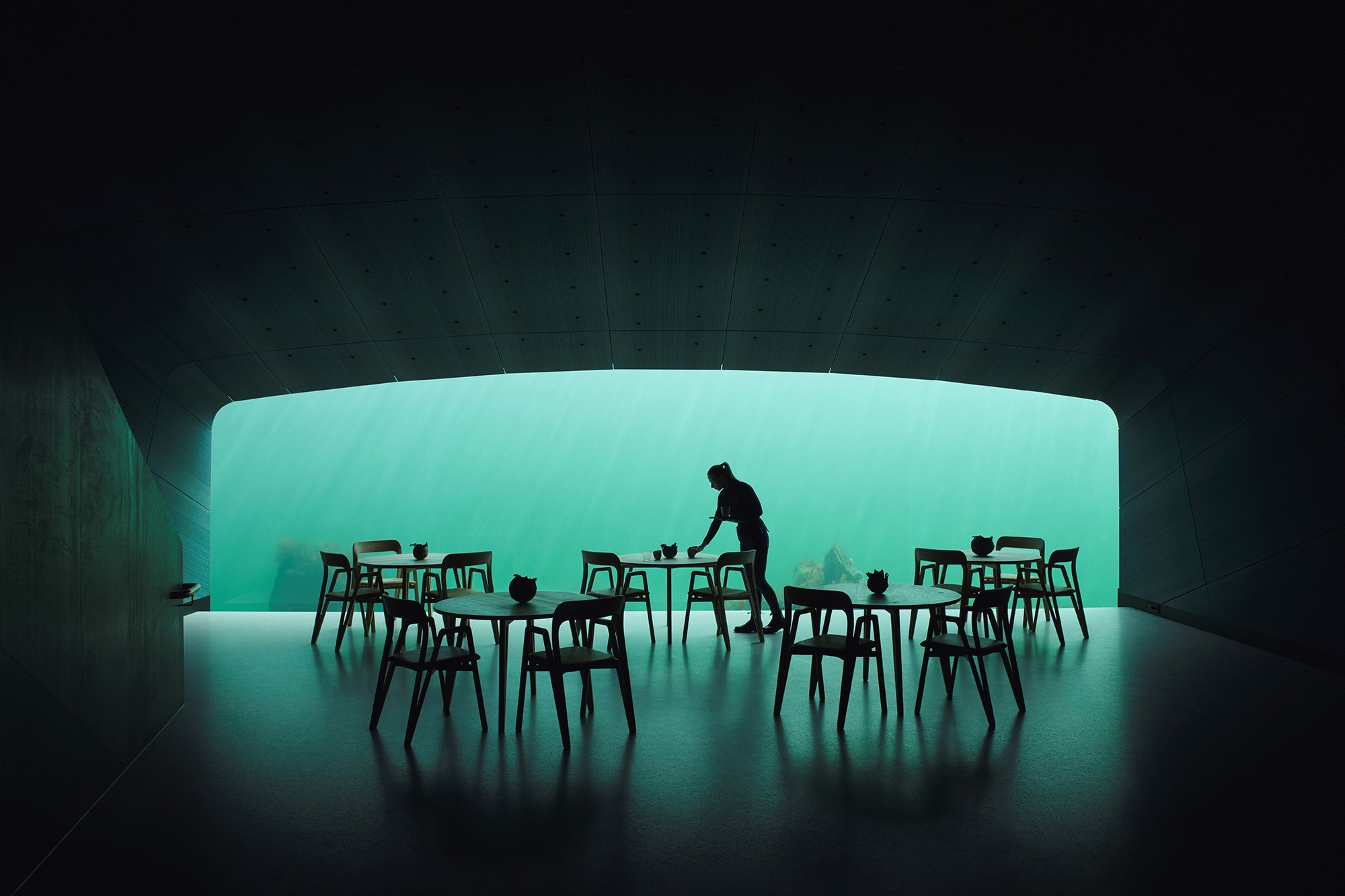
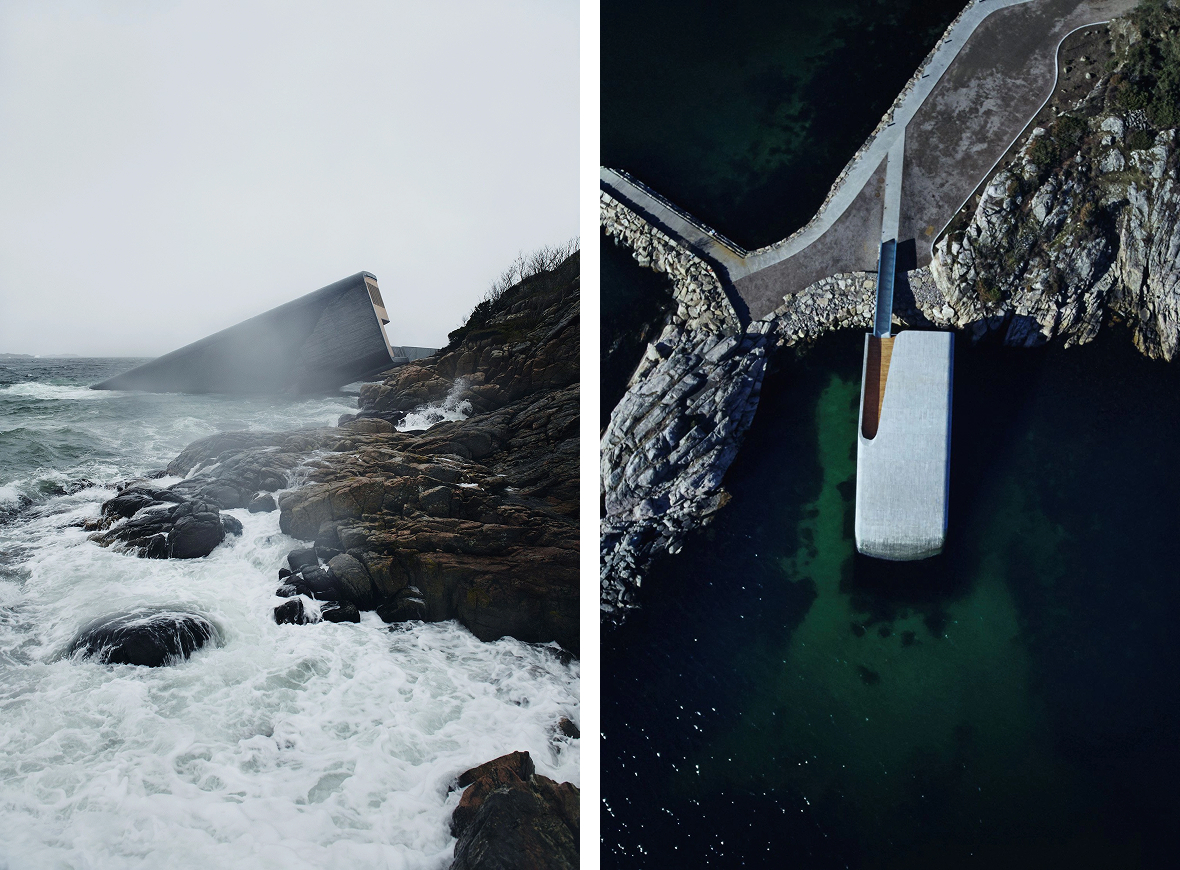
KM: Snøhetta’s underwater restaurant, Under, in Lindesnes, feels like a building that shouldn’t be possible, and yet it’s quietly iconic. How is it viewed inside Snøhetta? Did it set a standard for pushing what’s possible?
RW: It’s always interesting how famous Under is as a project, and how it captures the imagination. For us it holds a special place because we were trusted to handle nearly every aspect of it, apart from the food itself. Collaborating closely with the owner and head chef was integral, it wasn’t “architecture first,” it was alignment first.
Under also feels like a natural continuation of Snøhetta’s journey of working at edge conditions, pushing the boundary of what “possible” means. You could trace that thread back through the Oslo Opera House, and even earlier, to Alexandria.
And it’s a standout example of our “idea works” approach, where we step back, listen widely, and then anchor the project with one strong conceptual springboard. For Under, that concept was immersion. Everything revolves around immersing visitors in the surrounding natural world, not as spectacle, but as relationship.

Designing restaurants, designing memory
KM: How do architects approach restaurant design? What are the conventions, and what does it look like to follow or break them, intentionally?
RW: Restaurant design is a balancing act. There’s the practical vision of the kitchen and service team, flow, seating, timing, logistics. And then there’s the theatre of mood, intimacy, sound, and pacing. If those two aren’t held together, the experience fractures.
For us, the key is collaboration. Owners, chefs, staff, everyone carries a piece of the truth. Our job is to build a conceptual framework that supports the essence of the dining experience. Storytelling matters, but not as decoration. More like a quiet spine.
With Under, it was essential that the natural surroundings weren’t just “seen,” they were felt.
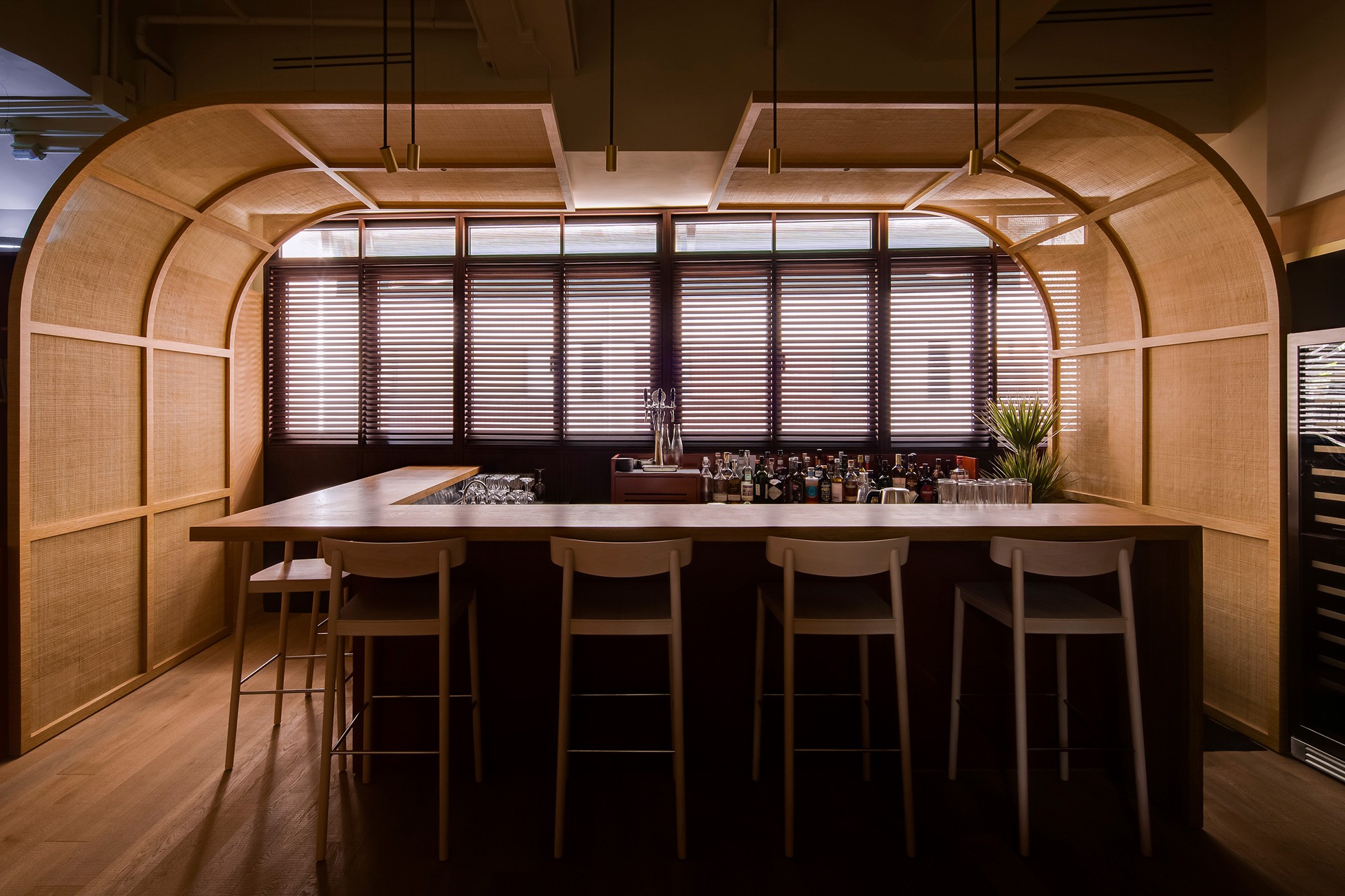
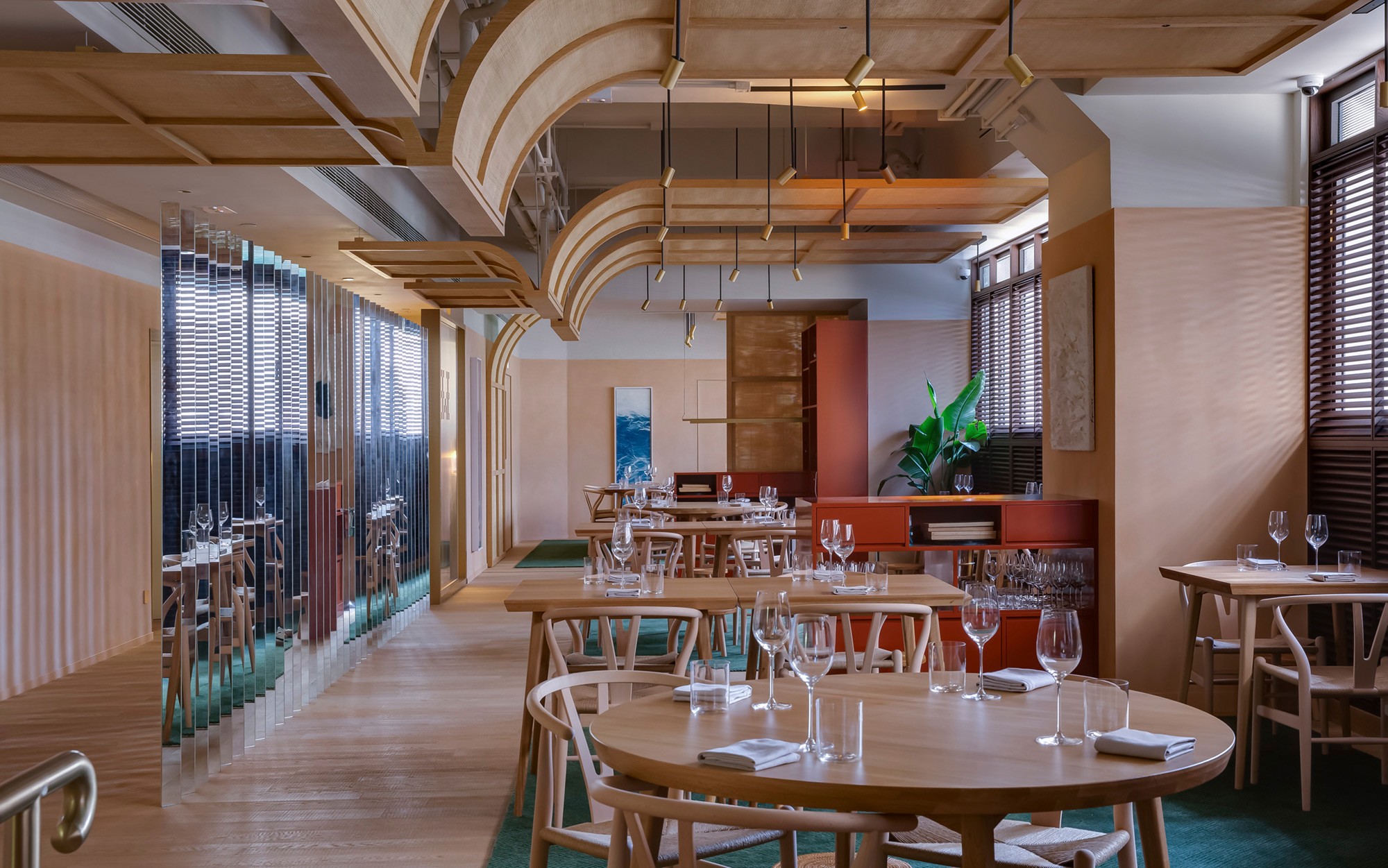
We’ve also been fortunate to work on hospitality projects across Asia. In Singapore, we designed Whey, a space that blends European and Asian cuisine within an eclectic setting. We drew inspiration from Scandinavian folk art and Peranakan architecture, and used materials like rattan to create bridges between traditions, not as fusion-for-fusion’s-sake, but as shared texture.
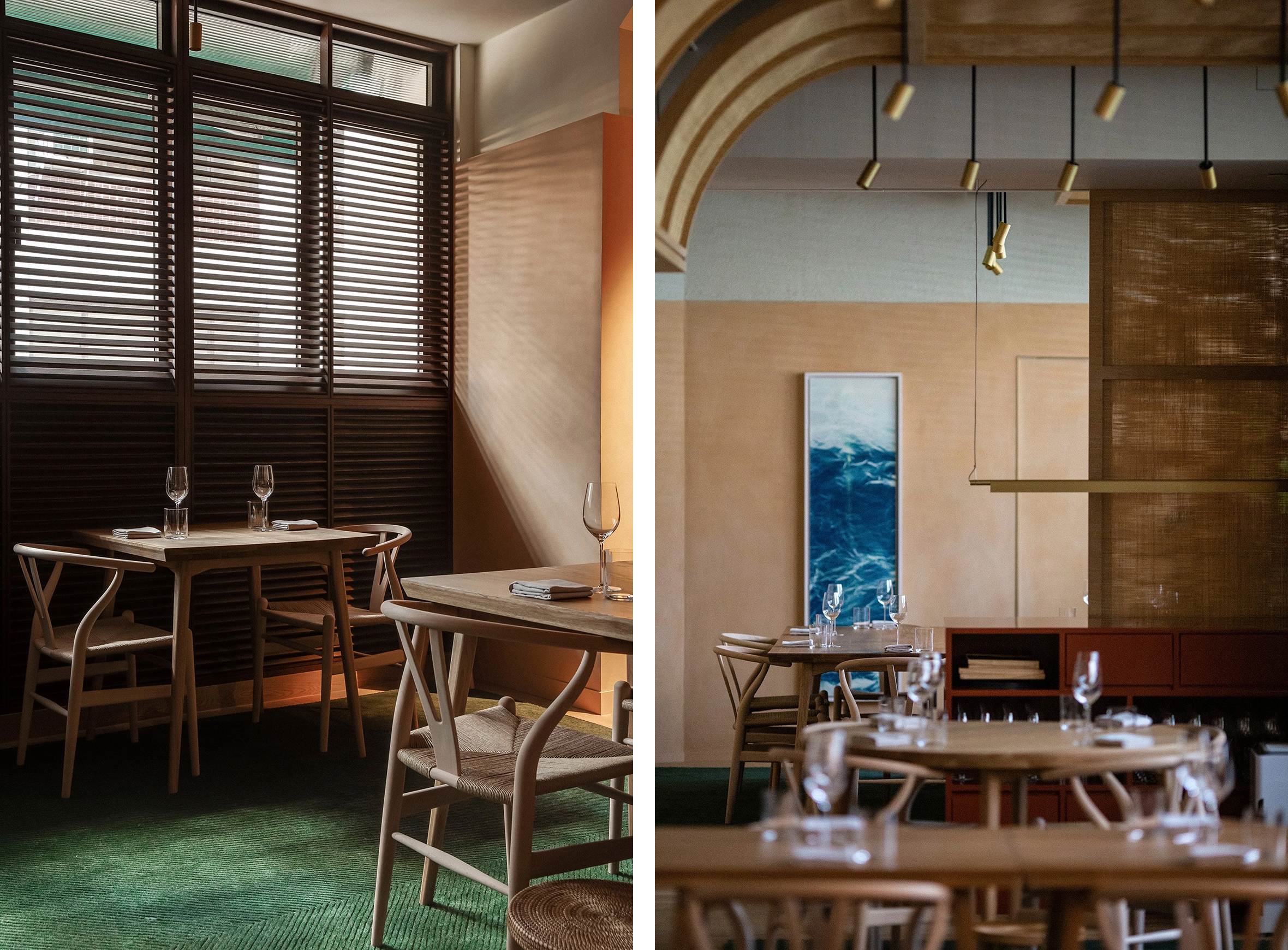
More recently, we completed a culinary space in Hong Kong designed to evoke emotion and memory. It operates equally by day and night, and that duality became a central design consideration. The concept leads diners through a journey of light, creating an immersive atmosphere that holds both dining and the culinary process itself. The goal is simple, to elevate making and eating into a shared experience.
“For us, Under holds a special place because we were trusted to handle nearly every aspect of the project, apart from the food itself.”
— Richard Wood
Transpositioning, and why empathy is a design method
KM: Snøhetta coined “transpositioning”, switching professional roles to gain empathy and fresh perspective. How does that show up in hospitality design?
RW: Balance again. In any team, you want wisdom about site, context, and brief, but you also want a dose of naivety, daring, and fresh eyes. Transpositioning helps us get there by loosening the boundaries of our professions.
In hospitality, that can be powerful. Collaborating with chefs, artisans, or local communities can lead to insights that architecture alone wouldn’t surface. A chef might shape spatial flow in ways that break convention, but are absolutely right for how the night should move.
A recent example was a client who is a passionate weekend vegetable gardener. That relationship, and those conversations, directly inspired how we approached rooftop terraces. It’s small, but it’s everything. Design is often made from details you only hear when you’re listening properly.
More about Richard Wood
Richard Wood is Managing Director Asia at Snøhetta, focused on developing the firm’s projects and values across the region. He has lived and worked in Asia since 2012, leading large public, institutional, and urban-scale projects. Selected work includes the Tokyo Shibuya Upper West Project, NOT A Hotel Rusutsu (Japan), and the Kota Kinabalu Masterplan (Malaysia), among others. He also teaches and speaks widely, including engagements with Hong Kong Polytechnic University, Shanghai Jiao Tong University, FIND Singapore, and Art Basel Hong Kong. Richard holds a Master of Architecture from The Bartlett, UCL, and is a member of RIBA.
著者: Kåre Martens Jr.
編集: Ana Arriola-Kanada
フィーチャード・クオート: 「Underというプロジェクトがこれほど有名で、想像力を掻き立てる存在になっていることは、いつも興味深いですね。」— Richard Wood
この連載の次のテーマは「食」。そして、食べるという行為のまわりに生まれる、あらゆる創造的表現についてです。最初の対話相手は Richard Wood。Snøhettaのアジア地域統括マネージング・ディレクターとして、2012年から香港を拠点に活動してきた人物です。
“食”は建築とよく並べて語られます。でもRichardの語りは、ありがちな比喩に落ちません。むしろ彼は、食事と空間が交差するところにある「共同性」と「記憶」について、静かに、でもはっきりと語ってくれました。
食べるという儀式, マンチェスター郊外から香港へ
KM: マンチェスター郊外での子ども時代、食や食卓の“儀式”は、家族やコミュニティの中でどんなふうに存在していましたか? そして今の香港での暮らしと比べると、どんな違いがありますか?
RW: 食から始めるのは面白いですね。でも自然な気もします。食と建築の関係はよく語られますが、少しだけ言うなら、どちらにも本質的に“共同性”がある。素材選びが重要なのも同じです, 食材であれ建材であれ。そして“味”に左右される, 文字通りにも比喩としても。
育った環境では、食事は実用性と伝統が中心でした。英国の多くがそうかもしれません。日曜のロースト、ティーブレイク、祝祭の集まり。カジュアルでも、しっかりとした“家族のつながり”が軸にある。
香港では、儀式性は同じくらい強いけれど、テンポが違います。街の密度やストリートの文化、そして飲茶のような伝統が、食を“生きた会話”にしている。食べること自体が社交のリズムなんです。
ひとつのプロジェクトに人生を重ねない, でも今に宿る
KM: あなたの英国での学び、アジアで得た視点、そしてSnøhettaの原則, それらがすべてひとつのプロジェクトに結晶したと感じたことはありますか?
RW: 難しい質問ですね。どれか一つのプロジェクトに“最も”つながる, とは言えないと思います。プロジェクトは個人のものではありません。常にチームで、そうあるべきです。Snøhetta内部だけでなく、クライアントや協働者も含めて。
大事なのは“接続”です。みんながゴールにどれだけつながっているか。それがアウトカムの質を決める。建築は結局, 人であり、相互作用であり、情熱であり、信頼です。
そして正直, 一番意味を持つのは、いま進行中のプロジェクトだったりします。いまの想像力がそこに宿っているから。朝起きて最初に考えるのが, そのプロジェクトなんです。
Under, そして“一つの概念”が空間を統一する力
KM: Snøhettaが手がけたノルウェー最南端リンデスネスの海中レストラン Under は、「作れるはずがないのに存在している」建築のように感じます。社内ではどのように捉えられていますか? 限界を押し広げた象徴的なプロジェクトでしたか?
RW: Underというプロジェクトがこれほど有名で、想像力を掻き立てる存在になっていることは、いつも興味深いですね。私たちにとって特別なのは, 食そのもの以外のほぼ全てを任せてもらえたことです。オーナーやヘッドシェフとの協働は不可欠でした。建築が先ではなく、まず整列, アライメントが先だった。
Underは、Snøhettaが“境界条件”で仕事をしてきた流れの自然な延長でもあります。オスロ・オペラハウス、さらに遡ればアレクサンドリア図書館にも、その系譜は見えると思います。
そして、私たちの「Idea Works」の良い例でもある。広く聴き、いったん引いて、プロジェクトを支える“一つの強い概念”を見つける。Underではそれが Immersion(没入) でした。周囲の自然を“見せる”のではなく、関係として“感じさせる”。そのために全体が組み立てられています。
レストランを設計するということ, 記憶を設計するということ
KM: 建築家はレストラン設計にどう向き合いますか? そして“型”を守る/壊す, そのさじ加減は?
RW: レストランはバランスの設計です。厨房やサービスの動線, 席配置, タイミング, 実務的な要件がある。一方で, 雰囲気, 親密さ, 音, テンポ, 体験の演出もある。この二つが同時に成立しないと、夜は簡単に割れてしまう。
私たちにとっての鍵は協働です。オーナー、シェフ、スタッフ、誰もが真実の断片を持っている。そこから“食事体験の本質”を支える概念フレームを作ります。ストーリーテリングは重要ですが、装飾ではありません。背骨のように静かに通っているものです。
Underでは、自然環境が“景色”として消費されないように, 身体で感じる関係にすることが不可欠でした。
アジアでもいくつかホスピタリティのプロジェクトに携わってきました。シンガポールの Whey では、欧州とアジアの料理が交差する空間を、スカンジナビアのフォークアートとプラナカン建築の参照から組み立てました。ラタンなどの素材を使い、単なる“フュージョン”ではなく, 伝統同士の共通の手触りを繋ぐことを意図しました。
最近完成した香港の料理空間は、感情と記憶を喚起することがテーマです。昼と夜の両方で成立する必要があり、その二面性が設計の核になりました。光の旅路としてダイナーを導く, そういう没入体験です。食べることと、作ることの両方を、ひとつの体験として持ち上げたいと思いました。
「Underが特別なのは, 食そのもの以外のほぼ全てを任せてもらえたことです。」— Richard Wood
トランスポジショニング, 共感を“方法論”にする
KM: Snøhettaの“Transpositioning(役割の交換)”は、共感と新しい視点を得るための方法論ですよね。ホスピタリティではどう効きますか?
RW: ここでもバランスです。場所や文脈、要件に対する深い知恵と同じくらい、ナイーブさや大胆さ、フレッシュな目が必要になる。トランスポジショニングは、職能の境界を緩めることで、その両方を成立させやすくします。
ホスピタリティでは特に効きます。シェフや職人、地域コミュニティと協働することで、建築だけでは出てこない洞察が生まれる。シェフが空間の流れを決めることもある, それは慣習を破るかもしれないけれど、その夜のリズムにとって“正しい”ことがある。
最近の例だと、週末は畑を耕すのが大好きなクライアントがいて, その会話が屋上テラスの設計に直接影響しました。小さなことに見えるけど、こういう細部がすべてです。ちゃんと聴いているときにしか, デザインは現れません。
Richard Woodについて
Richard Wood はSnøhettaのManaging Director Asia。2012年からアジアに在住し、公共建築、教育・文化施設、都市計画など大規模プロジェクトをリードしてきました。主な担当プロジェクトには、Tokyo Shibuya Upper West Project、NOT A Hotel Rusutsu(日本)、Kota Kinabalu Masterplan(マレーシア)などがあります。香港理工大学での教育活動や、上海交通大学、FIND Singapore、Art Basel Hong Kong等での登壇も多数。UCL The BartlettでMArchを取得し、RIBA会員。
constellations
SHIBUYA
SPECULATIVE FUTURES
NIGHTSHIFT SHAKEDOWN
FRIENDS OF
FUTURE OF
THIRDSPACE THIRDWEEKS
MOMENTS
held in sound


COLLECTIVE
yes,
Legal
Commercial Disclosure
Code of Conduct
privacy policy
Liability & Risk
Media Release
subscribe


© Semi Permanent / TOKYO SALONE

Tokyo salone
NOURISH
stories
Interview
Snøhetta, the architecture of appetite
Written by Kåre Martens Jr. / Edited by Ana Arriola-Kanada
“It’s always interesting how famous Under is as a project, and how it captures the imagination.”
— Richard Wood
This next run of conversations is about food, and all the creative expressions that gather around the ritual of eating. For our first chat, we sat down with Richard Wood, Snøhetta’s Managing Director for Asia. A Brit raised near Manchester, Richard has lived in Hong Kong since 2012, and has spent the last decade navigating the spaces where culture, hospitality, and architecture meet. He is also, as it turns out, a thoughtful observer of what happens when a meal becomes more than a meal.
The ritual of eating, then and now
KM: Tell me about growing up outside Manchester. How did food, and the ritual of eating, show up in your family and community? And how does that contrast with the life you now live in Hong Kong?
RW: It’s funny to start with food, but it makes sense. People often talk about the interplay between food and architecture, and while I don’t want to sound cliché, there’s something inherently communal about both. Both rely on careful selection of materials, ingredients or building elements, and both are shaped by “taste”, literally and figuratively.
Where I grew up, meals often centered on practicality and tradition, which is probably true across much of the UK. The ritual is rooted in family connections, Sunday roasts, tea breaks, festive gatherings, a kind of hearty togetherness, even when the setting is casual.
In Hong Kong, the rituals are just as strong, but the tempo is different. Food here is vibrant and social, shaped by street culture, by the density of the city, and by traditions like yum cha that turn eating into a living, moving conversation.
When a project feels like a whole life, without becoming “about one person”
KM: Is there a project you’ve worked on where your full lived experience shows up? Your education in the UK, what you’ve learned living in Asia, and what you carry of Snøhetta’s principles. Has it all ever come together in one beautiful expression?
RW: That’s a challenging question. I don’t think it’s possible to connect to any single project “more” than another, and it’s impossible to claim a project is about an individual. It’s always a team effort, and it should be. Not just within Snøhetta, but across clients and collaborators too.
What matters is connection. The stronger the collective connection to the goal, the better the outcome. In that sense, architecture is profoundly about people, interactions, passion, and trust.
And honestly, the project that feels most meaningful is often the one you’re in right now, because it’s where your present imagination lives. That’s the one you wake up thinking about.
Under, and the power of a single strong concept
KM: Snøhetta’s underwater restaurant, Under, in Lindesnes, feels like a building that shouldn’t be possible, and yet it’s quietly iconic. How is it viewed inside Snøhetta? Did it set a standard for pushing what’s possible?
RW: It’s always interesting how famous Under is as a project, and how it captures the imagination. For us it holds a special place because we were trusted to handle nearly every aspect of it, apart from the food itself. Collaborating closely with the owner and head chef was integral, it wasn’t “architecture first,” it was alignment first.
Under also feels like a natural continuation of Snøhetta’s journey of working at edge conditions, pushing the boundary of what “possible” means. You could trace that thread back through the Oslo Opera House, and even earlier, to Alexandria.
And it’s a standout example of our “idea works” approach, where we step back, listen widely, and then anchor the project with one strong conceptual springboard. For Under, that concept was immersion. Everything revolves around immersing visitors in the surrounding natural world, not as spectacle, but as relationship.
Designing restaurants, designing memory
KM: How do architects approach restaurant design? What are the conventions, and what does it look like to follow or break them, intentionally?
RW: Restaurant design is a balancing act. There’s the practical vision of the kitchen and service team, flow, seating, timing, logistics. And then there’s the theatre of mood, intimacy, sound, and pacing. If those two aren’t held together, the experience fractures.
For us, the key is collaboration. Owners, chefs, staff, everyone carries a piece of the truth. Our job is to build a conceptual framework that supports the essence of the dining experience. Storytelling matters, but not as decoration. More like a quiet spine.
With Under, it was essential that the natural surroundings weren’t just “seen,” they were felt.
We’ve also been fortunate to work on hospitality projects across Asia. In Singapore, we designed Whey, a space that blends European and Asian cuisine within an eclectic setting. We drew inspiration from Scandinavian folk art and Peranakan architecture, and used materials like rattan to create bridges between traditions, not as fusion-for-fusion’s-sake, but as shared texture.
More recently, we completed a culinary space in Hong Kong designed to evoke emotion and memory. It operates equally by day and night, and that duality became a central design consideration. The concept leads diners through a journey of light, creating an immersive atmosphere that holds both dining and the culinary process itself. The goal is simple, to elevate making and eating into a shared experience.
“For us, Under holds a special place because we were trusted to handle nearly every aspect of the project, apart from the food itself.”
— Richard Wood
Transpositioning, and why empathy is a design method
KM: Snøhetta coined “transpositioning”, switching professional roles to gain empathy and fresh perspective. How does that show up in hospitality design?
RW: Balance again. In any team, you want wisdom about site, context, and brief, but you also want a dose of naivety, daring, and fresh eyes. Transpositioning helps us get there by loosening the boundaries of our professions.
In hospitality, that can be powerful. Collaborating with chefs, artisans, or local communities can lead to insights that architecture alone wouldn’t surface. A chef might shape spatial flow in ways that break convention, but are absolutely right for how the night should move.
A recent example was a client who is a passionate weekend vegetable gardener. That relationship, and those conversations, directly inspired how we approached rooftop terraces. It’s small, but it’s everything. Design is often made from details you only hear when you’re listening properly.
More about Richard Wood
Richard Wood is Managing Director Asia at Snøhetta, focused on developing the firm’s projects and values across the region. He has lived and worked in Asia since 2012, leading large public, institutional, and urban-scale projects. Selected work includes the Tokyo Shibuya Upper West Project, NOT A Hotel Rusutsu (Japan), and the Kota Kinabalu Masterplan (Malaysia), among others. He also teaches and speaks widely, including engagements with Hong Kong Polytechnic University, Shanghai Jiao Tong University, FIND Singapore, and Art Basel Hong Kong. Richard holds a Master of Architecture from The Bartlett, UCL, and is a member of RIBA.
著者: Kåre Martens Jr.
編集: Ana Arriola-Kanada
フィーチャード・クオート: 「Underというプロジェクトがこれほど有名で、想像力を掻き立てる存在になっていることは、いつも興味深いですね。」— Richard Wood
この連載の次のテーマは「食」。そして、食べるという行為のまわりに生まれる、あらゆる創造的表現についてです。最初の対話相手は Richard Wood。Snøhettaのアジア地域統括マネージング・ディレクターとして、2012年から香港を拠点に活動してきた人物です。
“食”は建築とよく並べて語られます。でもRichardの語りは、ありがちな比喩に落ちません。むしろ彼は、食事と空間が交差するところにある「共同性」と「記憶」について、静かに、でもはっきりと語ってくれました。
食べるという儀式, マンチェスター郊外から香港へ
KM: マンチェスター郊外での子ども時代、食や食卓の“儀式”は、家族やコミュニティの中でどんなふうに存在していましたか? そして今の香港での暮らしと比べると、どんな違いがありますか?
RW: 食から始めるのは面白いですね。でも自然な気もします。食と建築の関係はよく語られますが、少しだけ言うなら、どちらにも本質的に“共同性”がある。素材選びが重要なのも同じです, 食材であれ建材であれ。そして“味”に左右される, 文字通りにも比喩としても。
育った環境では、食事は実用性と伝統が中心でした。英国の多くがそうかもしれません。日曜のロースト、ティーブレイク、祝祭の集まり。カジュアルでも、しっかりとした“家族のつながり”が軸にある。
香港では、儀式性は同じくらい強いけれど、テンポが違います。街の密度やストリートの文化、そして飲茶のような伝統が、食を“生きた会話”にしている。食べること自体が社交のリズムなんです。
ひとつのプロジェクトに人生を重ねない, でも今に宿る
KM: あなたの英国での学び、アジアで得た視点、そしてSnøhettaの原則, それらがすべてひとつのプロジェクトに結晶したと感じたことはありますか?
RW: 難しい質問ですね。どれか一つのプロジェクトに“最も”つながる, とは言えないと思います。プロジェクトは個人のものではありません。常にチームで、そうあるべきです。Snøhetta内部だけでなく、クライアントや協働者も含めて。
大事なのは“接続”です。みんながゴールにどれだけつながっているか。それがアウトカムの質を決める。建築は結局, 人であり、相互作用であり、情熱であり、信頼です。
そして正直, 一番意味を持つのは、いま進行中のプロジェクトだったりします。いまの想像力がそこに宿っているから。朝起きて最初に考えるのが, そのプロジェクトなんです。
Under, そして“一つの概念”が空間を統一する力
KM: Snøhettaが手がけたノルウェー最南端リンデスネスの海中レストラン Under は、「作れるはずがないのに存在している」建築のように感じます。社内ではどのように捉えられていますか? 限界を押し広げた象徴的なプロジェクトでしたか?
RW: Underというプロジェクトがこれほど有名で、想像力を掻き立てる存在になっていることは、いつも興味深いですね。私たちにとって特別なのは, 食そのもの以外のほぼ全てを任せてもらえたことです。オーナーやヘッドシェフとの協働は不可欠でした。建築が先ではなく、まず整列, アライメントが先だった。
Underは、Snøhettaが“境界条件”で仕事をしてきた流れの自然な延長でもあります。オスロ・オペラハウス、さらに遡ればアレクサンドリア図書館にも、その系譜は見えると思います。
そして、私たちの「Idea Works」の良い例でもある。広く聴き、いったん引いて、プロジェクトを支える“一つの強い概念”を見つける。Underではそれが Immersion(没入) でした。周囲の自然を“見せる”のではなく、関係として“感じさせる”。そのために全体が組み立てられています。
レストランを設計するということ, 記憶を設計するということ
KM: 建築家はレストラン設計にどう向き合いますか? そして“型”を守る/壊す, そのさじ加減は?
RW: レストランはバランスの設計です。厨房やサービスの動線, 席配置, タイミング, 実務的な要件がある。一方で, 雰囲気, 親密さ, 音, テンポ, 体験の演出もある。この二つが同時に成立しないと、夜は簡単に割れてしまう。
私たちにとっての鍵は協働です。オーナー、シェフ、スタッフ、誰もが真実の断片を持っている。そこから“食事体験の本質”を支える概念フレームを作ります。ストーリーテリングは重要ですが、装飾ではありません。背骨のように静かに通っているものです。
Underでは、自然環境が“景色”として消費されないように, 身体で感じる関係にすることが不可欠でした。
アジアでもいくつかホスピタリティのプロジェクトに携わってきました。シンガポールの Whey では、欧州とアジアの料理が交差する空間を、スカンジナビアのフォークアートとプラナカン建築の参照から組み立てました。ラタンなどの素材を使い、単なる“フュージョン”ではなく, 伝統同士の共通の手触りを繋ぐことを意図しました。
最近完成した香港の料理空間は、感情と記憶を喚起することがテーマです。昼と夜の両方で成立する必要があり、その二面性が設計の核になりました。光の旅路としてダイナーを導く, そういう没入体験です。食べることと、作ることの両方を、ひとつの体験として持ち上げたいと思いました。
「Underが特別なのは, 食そのもの以外のほぼ全てを任せてもらえたことです。」— Richard Wood
トランスポジショニング, 共感を“方法論”にする
KM: Snøhettaの“Transpositioning(役割の交換)”は、共感と新しい視点を得るための方法論ですよね。ホスピタリティではどう効きますか?
RW: ここでもバランスです。場所や文脈、要件に対する深い知恵と同じくらい、ナイーブさや大胆さ、フレッシュな目が必要になる。トランスポジショニングは、職能の境界を緩めることで、その両方を成立させやすくします。
ホスピタリティでは特に効きます。シェフや職人、地域コミュニティと協働することで、建築だけでは出てこない洞察が生まれる。シェフが空間の流れを決めることもある, それは慣習を破るかもしれないけれど、その夜のリズムにとって“正しい”ことがある。
最近の例だと、週末は畑を耕すのが大好きなクライアントがいて, その会話が屋上テラスの設計に直接影響しました。小さなことに見えるけど、こういう細部がすべてです。ちゃんと聴いているときにしか, デザインは現れません。
Richard Woodについて
Richard Wood はSnøhettaのManaging Director Asia。2012年からアジアに在住し、公共建築、教育・文化施設、都市計画など大規模プロジェクトをリードしてきました。主な担当プロジェクトには、Tokyo Shibuya Upper West Project、NOT A Hotel Rusutsu(日本)、Kota Kinabalu Masterplan(マレーシア)などがあります。香港理工大学での教育活動や、上海交通大学、FIND Singapore、Art Basel Hong Kong等での登壇も多数。UCL The BartlettでMArchを取得し、RIBA会員。
constellations
SHIBUYA
SPECULATIVE FUTURES
NIGHTSHIFT SHAKEDOWN
FRIENDS OF
FUTURE OF
THIRDSPACE THIRDWEEKS
MOMENTS
held in sound
COLLECTIVE
yes,
Legal
Commercial Disclosure
Code of Conduct
privacy policy
Liability & Risk
Media Release
subscribe


© Semi Permanent / TOKYO SALONE
Tokyo salone
NOURISH
stories
Interview
Snøhetta, the architecture of appetite
Written by Kåre Martens Jr. / Edited by Ana Arriola-Kanada
“It’s always interesting how famous Under is as a project, and how it captures the imagination.”
— Richard Wood
This next run of conversations is about food, and all the creative expressions that gather around the ritual of eating. For our first chat, we sat down with Richard Wood, Snøhetta’s Managing Director for Asia. A Brit raised near Manchester, Richard has lived in Hong Kong since 2012, and has spent the last decade navigating the spaces where culture, hospitality, and architecture meet. He is also, as it turns out, a thoughtful observer of what happens when a meal becomes more than a meal.
The ritual of eating, then and now
KM: Tell me about growing up outside Manchester. How did food, and the ritual of eating, show up in your family and community? And how does that contrast with the life you now live in Hong Kong?
RW: It’s funny to start with food, but it makes sense. People often talk about the interplay between food and architecture, and while I don’t want to sound cliché, there’s something inherently communal about both. Both rely on careful selection of materials, ingredients or building elements, and both are shaped by “taste”, literally and figuratively.
Where I grew up, meals often centered on practicality and tradition, which is probably true across much of the UK. The ritual is rooted in family connections, Sunday roasts, tea breaks, festive gatherings, a kind of hearty togetherness, even when the setting is casual.
In Hong Kong, the rituals are just as strong, but the tempo is different. Food here is vibrant and social, shaped by street culture, by the density of the city, and by traditions like yum cha that turn eating into a living, moving conversation.
When a project feels like a whole life, without becoming “about one person”
KM: Is there a project you’ve worked on where your full lived experience shows up? Your education in the UK, what you’ve learned living in Asia, and what you carry of Snøhetta’s principles. Has it all ever come together in one beautiful expression?
RW: That’s a challenging question. I don’t think it’s possible to connect to any single project “more” than another, and it’s impossible to claim a project is about an individual. It’s always a team effort, and it should be. Not just within Snøhetta, but across clients and collaborators too.
What matters is connection. The stronger the collective connection to the goal, the better the outcome. In that sense, architecture is profoundly about people, interactions, passion, and trust.
And honestly, the project that feels most meaningful is often the one you’re in right now, because it’s where your present imagination lives. That’s the one you wake up thinking about.
Under, and the power of a single strong concept
KM: Snøhetta’s underwater restaurant, Under, in Lindesnes, feels like a building that shouldn’t be possible, and yet it’s quietly iconic. How is it viewed inside Snøhetta? Did it set a standard for pushing what’s possible?
RW: It’s always interesting how famous Under is as a project, and how it captures the imagination. For us it holds a special place because we were trusted to handle nearly every aspect of it, apart from the food itself. Collaborating closely with the owner and head chef was integral, it wasn’t “architecture first,” it was alignment first.
Under also feels like a natural continuation of Snøhetta’s journey of working at edge conditions, pushing the boundary of what “possible” means. You could trace that thread back through the Oslo Opera House, and even earlier, to Alexandria.
And it’s a standout example of our “idea works” approach, where we step back, listen widely, and then anchor the project with one strong conceptual springboard. For Under, that concept was immersion. Everything revolves around immersing visitors in the surrounding natural world, not as spectacle, but as relationship.
Designing restaurants, designing memory
KM: How do architects approach restaurant design? What are the conventions, and what does it look like to follow or break them, intentionally?
RW: Restaurant design is a balancing act. There’s the practical vision of the kitchen and service team, flow, seating, timing, logistics. And then there’s the theatre of mood, intimacy, sound, and pacing. If those two aren’t held together, the experience fractures.
For us, the key is collaboration. Owners, chefs, staff, everyone carries a piece of the truth. Our job is to build a conceptual framework that supports the essence of the dining experience. Storytelling matters, but not as decoration. More like a quiet spine.
With Under, it was essential that the natural surroundings weren’t just “seen,” they were felt.
We’ve also been fortunate to work on hospitality projects across Asia. In Singapore, we designed Whey, a space that blends European and Asian cuisine within an eclectic setting. We drew inspiration from Scandinavian folk art and Peranakan architecture, and used materials like rattan to create bridges between traditions, not as fusion-for-fusion’s-sake, but as shared texture.
More recently, we completed a culinary space in Hong Kong designed to evoke emotion and memory. It operates equally by day and night, and that duality became a central design consideration. The concept leads diners through a journey of light, creating an immersive atmosphere that holds both dining and the culinary process itself. The goal is simple, to elevate making and eating into a shared experience.
“For us, Under holds a special place because we were trusted to handle nearly every aspect of the project, apart from the food itself.”
— Richard Wood
Transpositioning, and why empathy is a design method
KM: Snøhetta coined “transpositioning”, switching professional roles to gain empathy and fresh perspective. How does that show up in hospitality design?
RW: Balance again. In any team, you want wisdom about site, context, and brief, but you also want a dose of naivety, daring, and fresh eyes. Transpositioning helps us get there by loosening the boundaries of our professions.
In hospitality, that can be powerful. Collaborating with chefs, artisans, or local communities can lead to insights that architecture alone wouldn’t surface. A chef might shape spatial flow in ways that break convention, but are absolutely right for how the night should move.
A recent example was a client who is a passionate weekend vegetable gardener. That relationship, and those conversations, directly inspired how we approached rooftop terraces. It’s small, but it’s everything. Design is often made from details you only hear when you’re listening properly.
More about Richard Wood
Richard Wood is Managing Director Asia at Snøhetta, focused on developing the firm’s projects and values across the region. He has lived and worked in Asia since 2012, leading large public, institutional, and urban-scale projects. Selected work includes the Tokyo Shibuya Upper West Project, NOT A Hotel Rusutsu (Japan), and the Kota Kinabalu Masterplan (Malaysia), among others. He also teaches and speaks widely, including engagements with Hong Kong Polytechnic University, Shanghai Jiao Tong University, FIND Singapore, and Art Basel Hong Kong. Richard holds a Master of Architecture from The Bartlett, UCL, and is a member of RIBA.
著者: Kåre Martens Jr.
編集: Ana Arriola-Kanada
フィーチャード・クオート: 「Underというプロジェクトがこれほど有名で、想像力を掻き立てる存在になっていることは、いつも興味深いですね。」— Richard Wood
この連載の次のテーマは「食」。そして、食べるという行為のまわりに生まれる、あらゆる創造的表現についてです。最初の対話相手は Richard Wood。Snøhettaのアジア地域統括マネージング・ディレクターとして、2012年から香港を拠点に活動してきた人物です。
“食”は建築とよく並べて語られます。でもRichardの語りは、ありがちな比喩に落ちません。むしろ彼は、食事と空間が交差するところにある「共同性」と「記憶」について、静かに、でもはっきりと語ってくれました。
食べるという儀式, マンチェスター郊外から香港へ
KM: マンチェスター郊外での子ども時代、食や食卓の“儀式”は、家族やコミュニティの中でどんなふうに存在していましたか? そして今の香港での暮らしと比べると、どんな違いがありますか?
RW: 食から始めるのは面白いですね。でも自然な気もします。食と建築の関係はよく語られますが、少しだけ言うなら、どちらにも本質的に“共同性”がある。素材選びが重要なのも同じです, 食材であれ建材であれ。そして“味”に左右される, 文字通りにも比喩としても。
育った環境では、食事は実用性と伝統が中心でした。英国の多くがそうかもしれません。日曜のロースト、ティーブレイク、祝祭の集まり。カジュアルでも、しっかりとした“家族のつながり”が軸にある。
香港では、儀式性は同じくらい強いけれど、テンポが違います。街の密度やストリートの文化、そして飲茶のような伝統が、食を“生きた会話”にしている。食べること自体が社交のリズムなんです。
ひとつのプロジェクトに人生を重ねない, でも今に宿る
KM: あなたの英国での学び、アジアで得た視点、そしてSnøhettaの原則, それらがすべてひとつのプロジェクトに結晶したと感じたことはありますか?
RW: 難しい質問ですね。どれか一つのプロジェクトに“最も”つながる, とは言えないと思います。プロジェクトは個人のものではありません。常にチームで、そうあるべきです。Snøhetta内部だけでなく、クライアントや協働者も含めて。
大事なのは“接続”です。みんながゴールにどれだけつながっているか。それがアウトカムの質を決める。建築は結局, 人であり、相互作用であり、情熱であり、信頼です。
そして正直, 一番意味を持つのは、いま進行中のプロジェクトだったりします。いまの想像力がそこに宿っているから。朝起きて最初に考えるのが, そのプロジェクトなんです。
Under, そして“一つの概念”が空間を統一する力
KM: Snøhettaが手がけたノルウェー最南端リンデスネスの海中レストラン Under は、「作れるはずがないのに存在している」建築のように感じます。社内ではどのように捉えられていますか? 限界を押し広げた象徴的なプロジェクトでしたか?
RW: Underというプロジェクトがこれほど有名で、想像力を掻き立てる存在になっていることは、いつも興味深いですね。私たちにとって特別なのは, 食そのもの以外のほぼ全てを任せてもらえたことです。オーナーやヘッドシェフとの協働は不可欠でした。建築が先ではなく、まず整列, アライメントが先だった。
Underは、Snøhettaが“境界条件”で仕事をしてきた流れの自然な延長でもあります。オスロ・オペラハウス、さらに遡ればアレクサンドリア図書館にも、その系譜は見えると思います。
そして、私たちの「Idea Works」の良い例でもある。広く聴き、いったん引いて、プロジェクトを支える“一つの強い概念”を見つける。Underではそれが Immersion(没入) でした。周囲の自然を“見せる”のではなく、関係として“感じさせる”。そのために全体が組み立てられています。
レストランを設計するということ, 記憶を設計するということ
KM: 建築家はレストラン設計にどう向き合いますか? そして“型”を守る/壊す, そのさじ加減は?
RW: レストランはバランスの設計です。厨房やサービスの動線, 席配置, タイミング, 実務的な要件がある。一方で, 雰囲気, 親密さ, 音, テンポ, 体験の演出もある。この二つが同時に成立しないと、夜は簡単に割れてしまう。
私たちにとっての鍵は協働です。オーナー、シェフ、スタッフ、誰もが真実の断片を持っている。そこから“食事体験の本質”を支える概念フレームを作ります。ストーリーテリングは重要ですが、装飾ではありません。背骨のように静かに通っているものです。
Underでは、自然環境が“景色”として消費されないように, 身体で感じる関係にすることが不可欠でした。
アジアでもいくつかホスピタリティのプロジェクトに携わってきました。シンガポールの Whey では、欧州とアジアの料理が交差する空間を、スカンジナビアのフォークアートとプラナカン建築の参照から組み立てました。ラタンなどの素材を使い、単なる“フュージョン”ではなく, 伝統同士の共通の手触りを繋ぐことを意図しました。
最近完成した香港の料理空間は、感情と記憶を喚起することがテーマです。昼と夜の両方で成立する必要があり、その二面性が設計の核になりました。光の旅路としてダイナーを導く, そういう没入体験です。食べることと、作ることの両方を、ひとつの体験として持ち上げたいと思いました。
「Underが特別なのは, 食そのもの以外のほぼ全てを任せてもらえたことです。」— Richard Wood
トランスポジショニング, 共感を“方法論”にする
KM: Snøhettaの“Transpositioning(役割の交換)”は、共感と新しい視点を得るための方法論ですよね。ホスピタリティではどう効きますか?
RW: ここでもバランスです。場所や文脈、要件に対する深い知恵と同じくらい、ナイーブさや大胆さ、フレッシュな目が必要になる。トランスポジショニングは、職能の境界を緩めることで、その両方を成立させやすくします。
ホスピタリティでは特に効きます。シェフや職人、地域コミュニティと協働することで、建築だけでは出てこない洞察が生まれる。シェフが空間の流れを決めることもある, それは慣習を破るかもしれないけれど、その夜のリズムにとって“正しい”ことがある。
最近の例だと、週末は畑を耕すのが大好きなクライアントがいて, その会話が屋上テラスの設計に直接影響しました。小さなことに見えるけど、こういう細部がすべてです。ちゃんと聴いているときにしか, デザインは現れません。
Richard Woodについて
Richard Wood はSnøhettaのManaging Director Asia。2012年からアジアに在住し、公共建築、教育・文化施設、都市計画など大規模プロジェクトをリードしてきました。主な担当プロジェクトには、Tokyo Shibuya Upper West Project、NOT A Hotel Rusutsu(日本)、Kota Kinabalu Masterplan(マレーシア)などがあります。香港理工大学での教育活動や、上海交通大学、FIND Singapore、Art Basel Hong Kong等での登壇も多数。UCL The BartlettでMArchを取得し、RIBA会員。
constellations
SHIBUYA
SPECULATIVE FUTURES
NIGHTSHIFT SHAKEDOWN
FRIENDS OF
FUTURE OF
THIRDSPACE THIRDWEEKS
MOMENTS
held in sound
COLLECTIVE
yes,
Legal
Commercial Disclosure
Code of Conduct
privacy policy
Liability & Risk
Media Release
subscribe















© Semi Permanent / TOKYO SALONE